Stay informed with the latest industry insights.
October 22, 2026
LTL vs. FTL Freight: How to Choose the Right Option
We see this same gray area with lumber, cotton, electronics, medical supplies, paper, and retail freight all the time. LTL versus FTL freight usually gets interesting right where the old routing rules stop being useful.
Read More
September 30, 2026
CTPAT Certification: What It Is and Why It Matters for Your Supply Chain
CTPAT certification is CBP’s stamp of approval that your supply chain security program meets its standards.
September 25, 2026
What Does a Customs Broker Do? A Plain-Language Guide
What Does a Customs Broker Do After Freight Clears? More than you’d think. Once the container’s gone, the broker files the entry summary, pays the duty, and minds the entry until CBP finalizes it.
September 24, 2026
How to Prepare for a CBP Customs Audit
A CBP Customs Audit can turn a shipment you forgot about eight months ago into the most popular topic in the building.
September 15, 2026
Section 338 Expanded September 15: The 122 New Codes Aren’t the Expensive Part
The alcohol list now reaches Swiss, cheddar, and blue cheese, plus hides and upholstery leather. The auto list wandered even further, picking up graphic paper, structural steel, aluminum tubing, welding rod, golf carts, rattan chairs, mattresses, and bedside lamps.
September 9, 2026
Mallory Consumer Product Safety Alerts — August
We do our best to put these consumer product safety alerts together monthly because this material reaches your dock before it reaches the trade press. August gave us plenty.
August 25, 2026
Introducing Mallory Alexander’s Enhanced Air Export Gateway Program: Fewer Touches, Faster Uplift, Tighter Control
Air freight capacity is a moving target. Rates swing, lanes tighten, and belly space vanishes the moment ocean freight panics into air. If you’ve ever moved time-critical shipments, you know the feeling.
August 19, 2026
Your IOR Data Has 30 Days: CBP Starts Voiding Importer Numbers September 18
CBP published a notice on August 19 saying it’s reviewing the IOR data it holds on file tied to Form 5106. And starting September 18, the agency will void importer numbers whose information doesn’t hold up.
August 14, 2026
CTPAT Alert: Broker Responsibilities Under EO 14411 — What It Costs Importers
A broker who files for a client they can’t document is looking at fines, audits, and questions about their CTPAT standing, so they’re rebuilding files on clients they’ve had for years.
August 7, 2026
Tubas, Cranes, and Propane Tanks: 14 Products Could Join Section 232 Tariffs — Comments Close August 27
On August 6, BIS proposed adding 14 products to Section 232 tariffs, including flatbed trailers, terminal cranes, fire extinguishers, conductor cable, propane cylinders, and even tubas.
July 31, 2026
UFLPA Entity List Hits 187 Entities: Largest-Ever Expansion Includes Companies Located OUTSIDE Xinjiang
On July 31, the Department of Homeland Security announced the biggest ever expansion of the UFLPA Entity List, adding 43 companies in a single notice and bringing the total number to 187. Starting on August 3, CBP will assume that goods linked to these companies have been produced using forced labour and will therefore detain them at the port.
July 30, 2026
100% Duties, Two Deadlines: Section 232 Pharmaceutical Tariffs Take Effect July 31, 2026
Section 232 has spent 64 years as the tariff law for steel, aluminum, and other heavy goods. But now, as of April 2, 2026, when President Trump signed a proclamation, it covers medicine.
Section 338 Breaks Its 96-Year Silence: Canadian Imports Hit with a 50% Tariff
The additional 50% tariff covers products across agriculture, construction, manufacturing, retail, and recreation, with coverage determined by the specific HTSUS classifications listed in the annexes.
July 24, 2026
Forced Labor Tariffs Begin July 24: What the 10% and 12.5% Tariff Changes Mean for Your Cargo
Sixty economies are covered, which works out to about 99.4% of what the country imports. Seventeen countries pay 10%, and 38 pay 12.5%, while five have their rate capped once regular duty counts.
Air Freight For Time-Critical Shipments: What To Expect
Air freight is the move when the clock outweighs the cost of shipping, as long as it’s a real decision about when air beats ocean and when it doesn’t, not a reflex.
July 23, 2026
How to Ship Hazardous Materials by Air: A Compliance Guide
Knowing how to ship hazardous materials via air freight starts by catching those details before the cargo is packed, labeled, documented, and handed to a carrier.
July 22, 2026
Jordan Reciprocal Trade Agreement: What It Changes for Importers (and What It Doesn’t)
On July 21, 2026, U.S. Trade Representative Jamieson Greer and Jordan’s trade minister, Yarub Qudah, signed the U.S.-Jordan Agreement on Reciprocal Trade.
July 21, 2026
Brazil’s 25% Section 301 Tariff: What Importers Must Know Before July 22
We’ve been following this since the first filing, and we’ll keep our trade and tariff coverage updated as it moves. This is the practical version of where things stand and what to do next.
July 6, 2026
Mallory Consumer Product Safety Alerts — June
June stacked up five consumer product safety alerts that hit shippers where it counts. Mandatory eFiling lands July 8 and can strand a container over one missing field.
June 17, 2026
Supreme Court Lets China Section 301 Tariffs Stand: What List 3 and List 4A Mean for Importers Now
On June 15, 2026, the U.S. Supreme Court declined to review the long-running challenge to Section 301 List 3 and List 4A tariffs on Chinese goods, ending nearly six years of closely watched litigation.
June 16, 2026
Iran War News: Deal Reached. What It Means for Your Freight — June Monthly Update
Below, we break down the latest Iran war news: what’s been reported, what still needs confirmation, and what Mallory Alexander customers should watch before changing routing, inventory, or landed-cost assumptions.
Section 122 Tariffs Hold: Inside the Federal Circuit’s Stay and What It Means for Importers
On June 11, 2026, the Federal Circuit paused the ruling that struck down the 10% Section 122 tariff, granting the government’s request for a stay while the appeal plays out.
June 8, 2026
Trump’s New IOR Executive Order: Tougher Bonds, Continuous Vetting, and New Limits on Foreign Importers of Record
The order raises bonding and data requirements, restricts foreign IORs from filing entries unless they meet substance and CTPAT standards, mandates “good standing” with CBP, and extends enhanced, recurrent vetting to brokers, forwarders, and custodians.
June 3, 2026
How to Avoid Ocean Freight Delays: What Every Importer Should Know
This article gives importers a five-step framework for reducing ocean freight delays — from planning routes and documents earlier to coordinating drayage, warehousing, customs, and contingency options before cargo is already at risk.
June 1, 2026
When Should You Use Air Freight Instead of Ocean?
Air freight is not a default upgrade from ocean freight; it is a strategic exception for shipments when time, value, inventory exposure, or disruption risk outweighs the cost premium.
May 29, 2026
Iran War News: Supply Chain Risks and Freight Impacts Week of May 29
After three months of detours and surcharges, shippers finally caught a glimpse of the way out this week. A signed deal would cool fuel, reopen Hormuz, and walk rates back toward normal.
May 22, 2026
Iran War News: Supply Chain Risks and Freight Impacts Week of May 22
Pakistani Army Chief Asim Munir just touched down in Tehran carrying Washington’s latest proposal, and Secretary of State Marco Rubio is telling reporters he sees “good signs” that a deal is in sight.
May 15, 2026
Iran War News: Supply Chain Risks and Freight Impacts Week of May 15
The ceasefire is still alive. But it’s barely hanging on by a thread. That’s the short version of the latest Iran war news.
May 12, 2026
Mallory Consumer Product Safety Alerts — May
Every month, we track consumer product safety alerts through the lens that matters to shippers: what can hold freight, freeze inventory, trigger retailer pressure, complicate returns, or damage customer trust.
May 8, 2026
Iran War News: Supply Chain Risks and Freight Impacts Week of May 8
For shippers, the weekly takeaway is practical: protect transit options, verify counterparties, watch fuel-linked accessorials, and build sourcing flexibility before disruption becomes a purchase-order problem for priority cargo this week and beyond.
May 7, 2026
FCL vs LCL: Which Ocean Freight Option Is Right for Your Shipment?
The same lane that wanted full container load (FCL) in March can want less-than-container load (LCL) by September, and a thoughtful ocean freight call beats a default every single time.
May 1, 2026
Iran War News: Supply Chain Risks and Freight Impacts Week of May 1
As of early May 1, the Strait of Hormuz remained blocked, oil was elevated, air capacity was still constrained, and U.S. sanctions pressure was expanding across Iran-linked oil, vessels, refineries, and intermediaries.
April 30, 2026
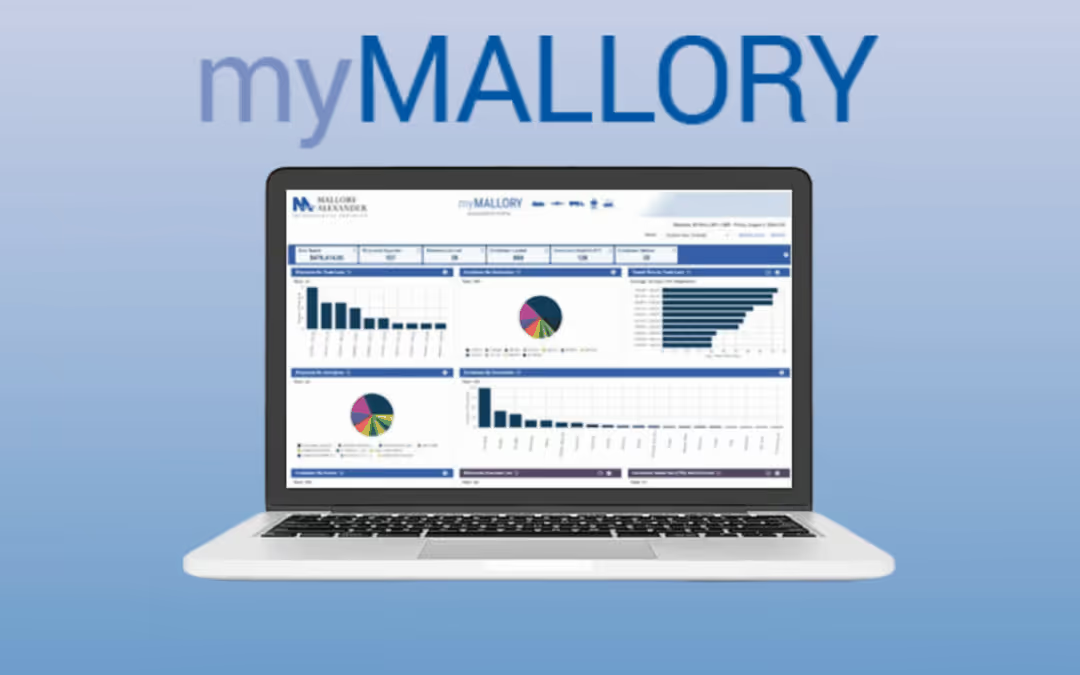
Built for Shippers, Designed for the Future: The New myMALLORY Supply Chain Visibility Platform Is Here
The upgrades under the hood will change how you run your day, from the first login in the morning to the last shipment status check before you head home.
April 24, 2026
Iran War News: Supply Chain Risks and Freight Impacts Week of April 24
Five ships cleared the Strait of Hormuz in the last 24 hours. The normal count is around 140. If you’ve been refreshing Iran war news all week, none of this should come as a shock.
April 22, 2026
What Is an Ocean Freight Forwarder (And Do You Need One)?
An ocean freight forwarder arranges the movement of your cargo. They book space with carriers, handle the export and import paperwork, and coordinate the handoffs between terminals, truckers, and customs brokers.
April 17, 2026
Iran War News: Supply Chain Risks and Freight Impacts
Air cargo capacity remains tight, Strait of Hormuz traffic is still far below normal, U.S. trucking is absorbing fuel shock, and sanctions risk is rising again.
April 15, 2026
IEEPA Refunds Update: What U.S. Importers Need to Do in ACE Before Filing a CAPE Declaration
CBP has made the process clearer, but clearer does not mean easy. Importers still need finance, compliance, and brokers moving in the same direction before a CAPE declaration goes anywhere.
Mallory Consumer Product Safety Alerts — April
Starting this month, we at Mallory Alexander will give you a monthly breakdown of the key consumer product safety alerts that you and your team should pay the closest attention to.
April 13, 2026
Demurrage vs. Detention: Definitions, Charges, and How to Dispute
The confusion between demurrage versus detention costs real money. Demurrage hits when your container sits too long at the terminal. Detention hits when you hold the carrier’s equipment past free time.
April 9, 2026
Section 232 Tariff Update: New 15% De Minimis Threshold Details for U.S. Importers
Your latest shipment probably contains more regulated metal than you think. A steel bracket inside a medical device housing. An aluminum frame under a consumer electronics shell. A metal fitting buried in an industrial assembly.
April 8, 2026
Iran War News: Week of April 10 Supply Chain Risks and Freight Impacts
A ceasefire landed on April 8, and if you checked the Iran war news headlines, you’d think the war and subsequent supply chain stories were over. You’re sorely mistaken.
April 3, 2026
Iran War News: Week of April 3 Supply Chain Risks and Freight Impacts
The Iran war news cycle moves fast, but the freight impact moves faster. Week by week, that bottleneck is spreading outward. What started as an oil shock is now a freight market event.
April 2026 Section 232 Tariff Update: What New Steel, Aluminum, Copper, and Pharmaceutical Import Rules Mean for U.S. Shippers
We went through the proclamations, the annexes, and the Federal Register filings line by line, and broke them down in plain English for you.
April 2, 2026
IEEPA Tariff Refunds Update: What CBP’s CAPE Phase 1 Means for Importers Right Now
IEEPA tariff refunds landed on a lot of Q3 forecasts the moment the announcements hit. Brandon Lord’s March 31 update from CBP should prompt a hard revision.
Supply Chain Continuity in a Volatile World: How Shippers Stay Predictable When Rates, Ports, and Policies Shift
So if visibility alone doesn’t protect supply chain continuity, what does? These seven controls do. Each one addresses a specific point where freight programs tend to fall apart under pressure.
April 1, 2026
Not an April Fools’ Day Post: CBP’s CAPE Refund System Just Got a Lot More Real
CBP provided a major progress update on CAPE to the Court of International Trade on March 30. The claim portal is now 85% complete and in testing. Phase 1 will cover approximately 63% of impacted entries. For importers and brokers, the window to prepare just got shorter and more specific.
HTS Codes Explained: How Classification Works and Why It Matters
Most shippers don’t think about HTS codes until something goes wrong. Then they think about nothing else. A misclassification can mean surprise duties, held freight, or a full customs audit landing on your desk.
March 26, 2026
IEEPA Tariff Refunds: How Importers Should Balance CAPE Claims, Protests, and Liquidation Risk
What looked like a straightforward IEEPA tariff refunds story has become an operations problem, a cash-flow problem, and a compliance-timing problem, all compounding at once.
March 18, 2026
Trade Policy Changes: Audit HTS Classifications Before They Cost You
Tariffs moved three times in a single week this February. It’s anyone’s guess when they’ll move again. Your HTS classifications shouldn’t be something you set once and forget about.
March 17, 2026
Act Now: Importers Need ACE Access to Receive CBP Refunds
CBP now requires refunds to be issued electronically through ACH in ACE, but most importers still are not set up to receive them. Here’s what importers need to do now and how Mallory Alexander can help.
March 13, 2026
Trade Policy Update: Two New Section 301 Investigations Put Importers on Notice
On March 11 and 12, 2026, USTR opened two new Section 301 investigation tracks—one focused on structural excess capacity in key manufacturing sectors and another covering forced labor import prohibitions across 60 trading partners. With comments and hearing requests due April 15, importers have a narrow window to assess sourcing, tariff, and compliance exposure before potential trade action accelerates.
Trade Compliance Update: CBP’s CAPE Refund System Is Taking Shape
CBP has told the Court of International Trade that its new CAPE functionality inside ACE is progressing, with claims, liquidation, and refund workflows now taking clearer shape. For importers and brokers, the opportunity is real—but so is the need to get entry data, ACH setup, and refund routing cleaned up now.
March 9, 2026
From IEEPA to Section 122: The Tariff Reset Shippers Can't Afford to Ignore
On March 5, 2026, twenty-four states filed suit in the Court of International Trade to permanently block Section 122 tariffs and recover duties already paid.
March 5, 2026
UFLPA Compliance Readiness: Documentation That Prevents Detentions and Disruption
Most shippers don’t need a lecture on UFLPA compliance. They need a partner who handles the heavy lifting so they can focus on actually running their business. That’s where we come in at Mallory Alexander.
March 3, 2026
Iran War News and Supply Chain Update: What Shippers Should Know and Do Next
We also recognize that real people, in real situations, all across the world, sit on every side of the latest Iran war news, and we don’t take that lightly.
February 26, 2026
Global Trade and Compliance: Duty Shock, Border Risk, and the New Cost-to-Serve
No matter what you’re moving, or where in the world you’re moving it, we put this global trade and compliance update together so you can stop piecing it together yourself.
February 25, 2026
Port Congestion Playbook: Keeping Freight Moving When Dwell Spikes
We built this playbook around four things you can do to combat port congestion: rerouting, appointment strategy, drayage readiness, and cargo prioritization.
February 20, 2026
Tariff Ruling: Tariffs Overturned, A Calm Plan For What Comes Next
That’s where we come in at Mallory Alexander. Our team is already deep in the details of this tariff ruling, reviewing refund eligibility, classification adjustments, and cost modeling across our client base.
February 19, 2026
Freight Forwarder vs. 3PL vs. NVOCC: What’s the Difference Between Logistics Partners?
Your ocean shipment clears customs, hits our warehouse, and gets picked, packed, and delivered without a single handoff falling through the cracks. One team. One technology platform.
February 13, 2026
Five Global Trade and Compliance Curveballs Thrown Before Valentine’s Day (And How to Swing Back)
Our team works as an extension of yours, whether you need to reclassify products under new tariff codes, build a CBAM reporting process from scratch, or stress-test your supply chain against different USMCA outcomes.
February 9, 2026
Most Carrier Scorecards Measure the Wrong Things
Stop measuring the wrong things. See why carrier scorecards fail and how the right metrics, leading indicators, and shared accountability drive results.
February 5, 2026
‘Real-Time Visibility’ Without Action Is Just Entertainment
Unlock the true power of real-time visibility by pairing it with playbooks, thresholds, and escalation paths to drive genuine action beyond spectacle.
January 27, 2026
Your Global Shipping SOP: The ‘No Drama’ Version
Build a no-drama shipping SOP that standardizes documents, cutoffs, approvals, and communication to reduce delays and variability in global freight.
January 22, 2026
Global Trade and Compliance January Update: Freight, Tariffs, and Geopolitics Collide
Stay ahead of global trade and compliance developments, from semiconductor tariffs and freight costs to Venezuela sanctions and Greenland tensions.
January 12, 2026
Global Trade and Compliance Update: Are Your Docs, Data, and Suppliers 2026-Ready?
Prepare for 2026 with this practical update on global trade and compliance — de minimis shifts, UFLPA scrutiny, tariffs, EU rules for shippers, and more.
November 5, 2025
U.S.–China Trade Update
Two new Executive Orders issued on November 4, 2025, update U.S. duty rates on Chinese-origin goods and outline continued suspension of certain reciprocal tariffs, affecting compliance expectations and future import planning. The first Executive Order reduces the additional tariff rate on certain Chinese-origin goods from 20% down to 10%, effective November 10, 2025. These tariffs […]
November 3, 2025
Duty Offset for Imports of Automobile Parts
U.S. Customs and Border Protection (CBP) issued guidance on the import adjustment offset applicable to Section 232 duties on automobile parts, following recent Presidential Proclamations and Department of Commerce procedures. The duty offset allows approved importers, those granted an official Import Adjustment Offset License from the U.S. Department of Commerce, to reduce or eliminate the […]
November 1, 2025
U.S. and China Reach New Agreement on Trade Issues
President Trump and Chinese President Xi Jinping met in South Korea, where the two leaders reached a preliminary agreement on several key trade issues. The U.S. will lower the tariff on Chinese imports related to fentanyl from 20% to 10% in exchange for China’s commitment to curb fentanyl trafficking. China will resume purchases of U.S. […]
October 30, 2025
U.S. Imposes New Tariffs on Heavy-Duty Vehicles and Parts Effective Nov 1
Effective November 1, 2025, the U.S. will impose new tariffs under a presidential proclamation adjusting imports of medium- and heavy-duty vehicles (MHDVs), related vehicle parts, and buses. A 25% duty will apply to covered MHDVs and certain vehicle parts, while a 10% duty will apply to imported buses. These tariffs apply to goods entered for […]
October 28, 2025
Mexico’s New Electronic Declaration Rule Could Cause Delays
Mexico will implement a major customs change on December 9, requiring importers to electronically submit a Manifestación de Valor Electrónica (Electronic Declaration of Value) through the Mexico’s Ventanilla Única de Comercio Exterior Mexicano portal before shipments can clear customs. The new rule shifts documentation from a post-clearance record to a pre-clearance requirement, meaning shipments cannot […]
October 27, 2025
Trade Outlook: U.S.–China Framework Could Ease Pressure on Supply Chains
U.S. and Chinese officials reached a preliminary framework for a trade agreement that could pause escalating tariffs and delay China’s rare earth export restrictions. U.S. Treasury Secretary Scott Bessent said the talks, held on the sidelines of the ASEAN Summit in Malaysia, eased the threat of an additional 100% tariff on Chinese goods starting November […]
Tariff Update: U.S. Escalates Duties on Canadian Imports, Impact Still Unclear
President Trump announced a 10% increase in tariffs on Canadian goods after an Ontario government ad aired during the World Series. It remains unclear which products will be affected. Most Canadian exports to the U.S. remain tariff-free under the USMCA, however, the U.S. administration has already imposed steep tariffs this year, 35% on non-USMCA goods […]
U.S. Signs New Trade Agreements with Southeast Asian Nations
The U.S. signed a series of new trade agreements with Malaysia, Thailand, Cambodia, and Vietnam, aimed at reducing trade imbalances, expanding market access, and strengthening regional economic partnerships across Southeast Asia. The new reciprocal trade frameworks commit all four partner countries to reduce tariff and non-tariff barriers, enhance digital trade and investment, and promote labor […]
October 20, 2025
New U.S.–China Port Fees Impact Vessel Availability and Trade Routes
The U.S. implemented new port fees targeting Chinese-built and Chinese-operated vessels. Chinese vessel owners and operators calling at U.S. ports now face a $50 per net ton fee, while Chinese-built ships are subject to the greater of $18 per net ton or $120 per container. These rates are scheduled to increase over time. In response, […]
IMO Delays Vote on Global Shipping Net-Zero Framework by One Year
Member states of the International Maritime Organization (IMO) voted to delay by one year the adoption of its global net-zero greenhouse gas framework for shipping. The motion, proposed by Singapore and pushed forward by Saudi Arabia, passed with 57 votes in favor, 49 against, and 21 abstentions during a session of the Marine Environment Protection […]
October 14, 2025
IMO Net-Zero Framework Vote
The International Maritime Organization is holding a pivotal meeting in London this week, where member states are set to vote on the adoption of a new net-zero framework for global shipping emissions. If approved, the framework would mark a historic step toward decarbonizing the shipping industry, establishing the world’s first sector-wide carbon pricing mechanism. The […]
Rotterdam Port Congestion Update
A Dutch court has ordered Port of Rotterdam lashers to temporarily return to work for four days after an extended strike caused major port congestion and supply chain disruptions. The strike, which began October 8 created significant backlogs. The court ruled that the strike had a disproportionate impact on supply chains and national interests, prompting […]
October 13, 2025
New Section 232 Duties on Timber & Wood Products – Effective Oct. 14
CBP announces new Section 232 tariffs on timber, lumber, and wood products effective October 14, 2025. Learn which imports are impacted.
October 10, 2025
Norfolk Southern International Intermodal Changes
Norfolk Southern Railway is overhauling its international intermodal network to improve efficiency and expand East Coast service into the Midwest. The changes, effective October 20, include consolidating operations and adding new train capacity from major East Coast ports. Norfolk Southern will discontinue select West Coast international trains with minimal volume to Cleveland and Detroit, while […]
U.S.–China Trade Tensions Deepen as Both Sides Announce New Fees and Tariff Measures
Trade tensions between the U.S. and China have flared again as both countries announce new fees. China’s Ministry of Transportation confirmed new tonnage fees on U.S.-owned and -operated vessels calling at Chinese ports, mirroring the U.S. Section 301 fees set to take effect on October 14. These charges target ships that are U.S.-flagged, built, or […]
October 9, 2025
Labor Strikes Disrupt Rotterdam and Antwerp
Port operations at Rotterdam and Antwerp are facing major disruptions due to labor strikes this week, compounding congestion and delays across Europe’s busiest gateways. In Belgium, Flemish pilotage services are only working limited hours amid a pension reform dispute, causing vessel delays in Antwerp and Zeebrugge. In Rotterdam, container lashing workers launched a 48-hour strike […]
October 8, 2025
Update: Government Shutdown – CBP Operations and Agency Impacts
U.S. Customs and Border Protection (CBP) remains operational during the government shutdown. Cargo clearance, ABI support, ACE, OR&R, FP&F, permits, FTZ, and bonded warehouse requests continue as usual. Tariff enforcement also remains active, including implementation of the new Section 232 tariffs on lumber and furniture set for October 14. Some other federal agencies are experiencing […]
October 7, 2025
Endeavour and CoPilot Global Logistics Partner to Acquire Mallory Alexander
CoPilot Global Logistics and Endeavour acquire Mallory Alexander, building on its 100-year legacy to create a world-class, customer-focused logistics platform.
25% Tariff Announced on Heavy Truck Imports
President Trump announced a 25% tariff on imported medium- and heavy-duty trucks, effective November 1, 2025. The move follows a Section 232 investigation under the Trade Expansion Act. The tariff is expected to primarily impact imports from Mexico, which supplies most U.S.-bound heavy trucks under the USMCA framework. Vehicles meeting regional content requirements will remain […]
October 6, 2025
New Section 301 Vessel Fees Set to Reshape Global Shipping Networks
U.S. Customs and Border Protection (CBP) announced implementation details for new Section 301 vessel fees under a Federal Register notice issued in April. The fees apply to vessels owned, operated, or built in China, as well as foreign-built vehicle carrier vessels, with Liquified Natural Gas (LNG) tankers specifically exempt. The responsibility to determine and pay […]
October 2, 2025
CBP Operations During the Government Shutdown
U.S. Customs and Border Protection remains operational during the government shutdown, with nearly all staff exempted from furloughs and continuing normal trade functions at ports of entry. Ports of entry are open and staffed; cargo clearance, ABI support, ACE, OR&R, FP&F, permits, FTZ and bonded warehouse requests continue as normal. Tariff enforcement will continue and […]
Turning Supply Chain Data into Action
From shipment tracking to smart reporting, our business analysis team makes supply chain data clear, reliable, and easy to act on.
September 30, 2025
Section 232 Tariffs on Lumber, Upholstered Furniture and Cabinets
A proclamation signed Sept. 29 announced the implementation of Section 232 tariffs on lumber, upholstered furniture and cabinets starting October 14. New tariffs effective Oct. 14, 2025: 10% on softwood timber and lumber 25% on upholstered wood products, will increase to 30% in 2026 25% on kitchen cabinets and vanities, will increase to 50% in […]
China Tightens Maritime Rules as U.S. Fees on Chinese Ships Near
China amended its maritime regulations to allow penalties and restrictions on vessels, data, and services from countries it accuses of targeting its shipping operations. The amendment, signed by Premier Li Qiang, took effect September 28, 2025. These changes come 2 weeks before the U.S. will start collecting fees on Chinese-built ships. In 2024, multiple U.S. […]
September 26, 2025
Announcement: New Tariffs on Pharmaceuticals, Furniture and Heavy Trucks
President Trump announced via social media new tariffs effective October 1, 2025, on pharmaceuticals, furniture, and heavy trucks. Pharmaceuticals: 100% tariff on branded and patented drugs imported into the U.S. Exemption for companies currently building or constructing U.S. manufacturing plants. Furniture: 50% tariff on kitchen cabinets, bathroom vanities, and related products. 30% tariff on upholstered […]
September 25, 2025
China Office Holiday Closure: Golden Week Oct 1-8
Our Shanghai and Shenzhen offices will be closed from October 1–8 in observance of China’s National Day and Mid-Autumn Festival. Normal operations will resume on October 9. During the holiday period: Each team will have colleagues on duty to handle urgent documentation and cargo tracking. Please send relevant emails to your team’s group mailbox for […]
U.S.–EU Agreement on Tariffs
On August 21, 2025, the U.S. and EU announced a new trade agreement. It outlined adjustments to tariffs on certain EU products, including automobiles and auto parts, aircraft and aircraft parts, unavailable natural resources, and generic pharmaceuticals and related ingredients. A federal register notice released today outlines the following: August 1, 2025 – Tariff modifications for […]
Super Typhoon Ragasa Update
Super Typhoon Ragasa, one of the most powerful storms of the year, made landfall Wednesday morning along the coast of Zhuhai in Guangdong Province, bringing extreme winds and heavy rainfall to southern China, including Guangdong, Fujian, and Hong Kong. As a safety measure, our Hong Kong office, in addition to many schools, businesses, public transportation, […]
September 24, 2025
New Section 232 Investigation into Medical Equipment
The Department of Commerce launched a new Section 232 investigation into imports of a wide range of goods, including personal protective equipment (PPE), medical devices, robotics, and industrial machinery. These probes, opened September 2, 2025, could lead to higher tariffs on items such as face masks, syringes and other essential medical supplies. The investigation also […]
September 22, 2025
Typhoon Ragasa Disrupts South China Air and Ocean Freight
South China’s air and ocean networks are facing major disruption this week as Super Typhoon Ragasa approaches. With sustained winds of 230 km/h (137 mph), the storm is expected to pass just south of Hong Kong late Tuesday, making landfall in Guangdong Province on Wednesday. Port Impact: Container terminals in Shenzhen, Hong Kong, and Guangzhou […]
September 19, 2025
New Process for Adding Auto Parts to Section 232 Tariffs
On September 17, 2025, the Bureau of Industry and Security (BIS) issued an interim final rule establishing an inclusion process to add automobile parts to Section 232 tariffs. Key details: Submission windows open four times a year: January, April, July, and October. The first window opens October 1, 2025. Domestic producers can submit inclusion requests […]
USTR Seeks Public Input Ahead of 2026 USMCA Review
The Office of the U.S. Trade Representative (USTR) is inviting public comments ahead of the first Joint Review of the USMCA (United States-Mexico-Canada Agreement) scheduled for July 1, 2026. This review will determine whether the three countries will extend the agreement for another 16 years. USTR is seeking feedback on the agreement’s effectiveness, compliance issues, […]
September 17, 2025
Federal Government Ending Paper Checks for Duty Refunds
By September 30, 2025, the U.S. government will eliminate paper checks for all disbursements, including duty refunds from U.S. Customs and Border Protection (CBP). Importers will need to enroll in CBP’s Automated Clearinghouse (ACH) Refund Program, which deposits refunds directly into their bank accounts. Key details: Separate enrollment is required even if a company already […]
September 16, 2025
Tariff Changes for Japan
On September 4, 2025, Executive Order 14345 was signed to implement the United States-Japan Agreement. This executive order, issued under IEEPA and Section 232, establishes a baseline 15% tariff on nearly all Japanese imports, along with special provisions for automobiles, auto parts, and civil aircraft. Effective Date: Applies to Japanese goods entered or withdrawn for […]
September 8, 2025
Changes to Reciprocal Tariff Exemptions
An executive order released Friday night (9/5/25) adjusts the scope of Annex II which lists goods that are not subject to IEEPA reciprocal tariffs. Certain products were removed from Annex II while other products were added. The revised version of Annex II is effective for goods entered for sale or withdrawn from a warehouse for sale on or after 9/8/25 […]
September 5, 2025
U.S.–Japan Trade Deal Implementation
An executive order was signed outlining the framework of the trade agreement between the U.S. and Japan. Key highlights include: Baseline IEEPA Reciprocal Tariff The U.S. will impose a 15% tariff on nearly all Japanese imports. Products with existing tariffs at or above 15% will not see additional increases. Effective retroactively for goods entered on or after […]
September 2, 2025
Federal Circuit Rules on IEEPA Tariffs: Duties Remain in Place
On August 29, 2025, the U.S. Court of Appeals for the Federal Circuit ruled that the reciprocal tariffs and fentanyl-related tariffs imposed under the International Emergency Economic Powers Act (IEEPA) exceeded presidential authority. This does not change the current collection of IEEPA tariffs by CBP. CBP will continue collecting tariffs while the Supreme Court prepares […]
August 29, 2025
De Minimis Suspension for All Countries
Per an Executive Order released in July, effective August 29, 2025, de minimis duty-free treatment will no longer be available for shipments entering into the U.S., including those entering through international mail. U.S. Customs and Border Protection (CBP) released CSMS #65934463 and #66065494 with further guidance regarding the processing and duty collection of de minims […]
Extension of Section 301 China Product Exclusions to Nov. 29
The Office of the U.S. Trade Representative (USTR) announced an additional 90-day extension of product exclusions under the Section 301 tariffs on Chinese imports. U.S. Customs and Border Protection (CBP) has released CSMS #66077997, confirming the extension of certain Section 301 product exclusions on Chinese imports. What’s extended: 164 product-specific exclusions and 14 manufacturing equipment exclusions. New […]
August 27, 2025
Video: Project Cargo in Winchester, VA
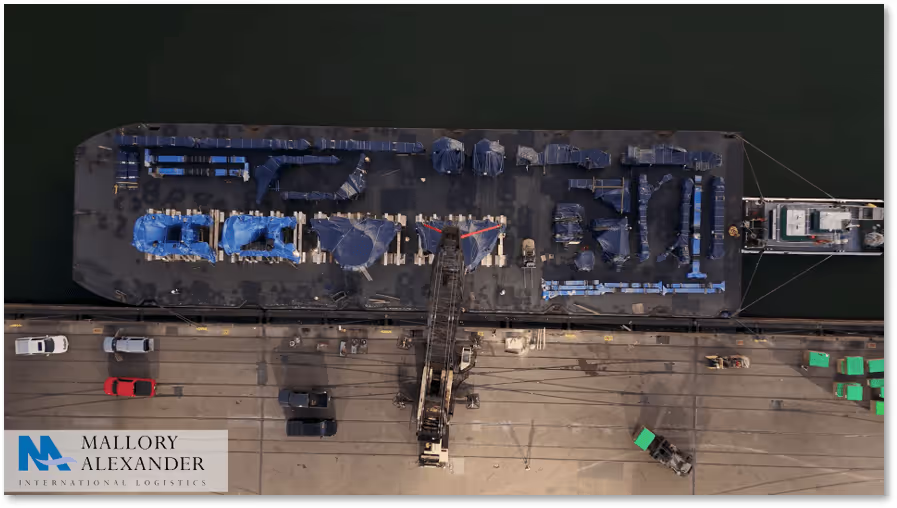
Our Project Cargo team managed the journey from Tokyo to Winchester, VA, with a RORO discharge at the Port of Baltimore. Another successful delivery showcasing the precision and expertise behind complex global logistics.
Additional Duties on Imports from India Effective Aug. 27
Effective August 27, 2025, at 12:01am ET, the U.S. implemented an additional 25% duty on most imports of Indian-origin goods under Executive Order 14329. Certain items are exempt, including specified metals, vehicles/parts, humanitarian donations, and informational materials. U.S. Customs and Border Protection (CBP) released guidance regarding the additional duties on imports from India in CSMS #66027027. We encourage […]
August 25, 2025
Retaliatory Tariff Update & Tariff Resources
Retaliatory Tariffs Canada will lift many retaliatory tariffs on U.S. goods as part of efforts to restart trade talks, while maintaining duties on auto parts, steel, and aluminum. Prime Minister Mark Carney said the move aligns with the USMCA agreement and follows a recent U.S. decision not to impose certain tariffs on Canadian goods. The […]
August 18, 2025
U.S. Customs Issues New Guidance on Aluminum, Steel and De Minimis Shipments
50% Aluminum and Steel Tariff Updates U.S. Customs and Border Protection (CBP) released CSMS # 65936615 (Aluminum) and CSMS # 65936570 (Steel) adding more aluminum and steel derivative products to Annex I of Proclamation 10895 for aluminum and Proclamation 10896 for steel. These updates apply to goods entered for sale or withdrawn from the warehouse for sale on or after August 18, […]
August 14, 2025
Air Canada Cargo Disruption Risk
The Canadian Union of Public Employees (CUPE), which represents 10,000 flight attendants at Air Canada and Air Canada Rouge, issued notice and will go on strike on Saturday as negotiations for a new contract continue to be stalled. Air Canada has begun canceling flights that normally carry significant bellyhold freight to Europe and Asia which […]
August 12, 2025
Reciprocal Tariff Rates on China Extended
On Monday, President Trump signed an executive order extending the 10% IEEPA reciprocal tariffs on goods from China, Hong Kong, and Macau. The tariffs apply to goods entered for sale or withdrawn from a warehouse for sale before November 10, 2025. U.S. Customs and Border Protection has released guidance with CSMS #65894387. The duty for […]
August 6, 2025
New 25% Tariff on India
Today, the U.S. administration issued a new fact sheet and executive order imposing an additional 25% tariff on imports from India due to findings that India is directly or indirectly importing Russian oil. The additional 25% tariff takes effect 21 days after August 6, 2025, with certain transit exceptions, and are in addition to other applicable duties. We […]
Why Do You Need a Licensed Customs Broker?
Licensed Customs Brokers play a critical role in ensuring import compliance with U.S. regulations. Learn what customs brokers do, how to become licensed, and how Mallory Alexander supports importers with expert customs brokerage services and regulatory guidance.
August 5, 2025
IEEPA Reciprocal Tariffs Effective August 7 2025
The U.S. administration released a new executive order modifying the reciprocal tariff rates. The new tariff rates (ranging from 10-41%) are effective for goods entered for sale or withdrawn from a warehouse for sale on or after 12:01am ET 7 days from the date of July 31, 2025. The new adjusted reciprocal tariff rates can […]
August 4, 2025
New Tariff Rate for Brazil Effective August 6 2025
On July 30, 2025, President Trump signed an Executive Order stating articles imported from Brazil will be subject to an additional ad valorem duty rate of 40% going into effect August 6, 2025 (9903.01.77). The U.S. Customs and Border Protection (CBP) provided guidance for additional duties on imports from Brazil. Exemptions: 9903.01.78: Products of Brazil that were loaded […]
August 1, 2025
New Traffic Mitigation Fees at Ports in California
Effective August 1, 2025, the Traffic Mitigation Fee (TMF) at the Ports of Los Angeles and Long Beach will an increase 2.84%. This aligns with recent wage increases under the labor agreement between the ILWU and the Pacific Maritime Association. The updated TMF will be $38.78 per TEU and $77.56 for larger containers, applied to […]
July 31, 2025
Canada & Mexico Tariff Updates
An executive order was signed raising tariffs on Canadian imports from 25% to 35%, effective August 1, 2025. Goods under USMCA remain exempt, but transshipped goods will face a 40% tariff. U.S. Customs released additional guidance and HTS code updates in CSMS #65798609. President Trump also announced a 90-day negotiation period with Mexico following a call […]
July 30, 2025
U.S. Customs Guidance: Tariffs on Copper
President Trump signed a Proclamation to adjust tariffs on copper. All imports of semi-finished copper products and intensive copper derivative products will be subject to a 50% tariff, effective August 1, 2025. This tariff is in addition to any other duties, fees, exactions, and charges applicable to such products. Non-copper content of an article will be […]
Executive Order Suspending Duty-Free De Minimis Treatment
President Trump signed an Executive Order to suspend the duty-free de minimis exception for all countries under the International Emergency Economic Powers Act (IEEPA), effective August 29, 2025. All low-value shipments (previously duty-free if under $800) will be subject to all applicable duties, taxes, fees, exactions, and charges, regardless of value or mode of entry, except certain […]
New Tariff Rate for India & South Korea Announced
President Trump announced on social media that a 25% tariff on goods imported from India will go into effect on August 1, 2025. Additionally, an unspecified penalty will be enforced due to India’s purchasing of Russian oil and military equipment. The Indian government has stated that it is studying the implications of President Trump’s announcement […]
July 28, 2025
New Trade Agreement Between the U.S. and the European Union
On July 27th, President Trump and European Commission President Ursula von der Leyen announced a new trade agreement between the U.S. and the European Union. This agreement aims to rebalance the economic relationship between the two regions while creating new opportunities for U.S. exporters, manufacturers, and investors. Key Points of the Trade Agreement: The European Union […]
July 23, 2025
New Trade Agreement with Japan Announced
After several months of negotiation, the U.S. and Japan have reached a formal trade agreement that includes notable changes to tariffs and long-term investment commitments: Tariffs on Japanese Imports Reduced: The U.S. will implement a new 15% tariff on Japanese goods, down from the 25% rate previously under consideration. This includes the standard 2.5% base […]
July 14, 2025
U.S. Issues New 30% Tariff on the EU and Mexico
Last week, the U.S. administration sent letters to approximately 22 nations outlining new reciprocal tariff rates, including a 50% tariff on imports from Brazil. On Friday, it was announced that Canada received a letter with a new rate at 35% and then on Saturday letters were sent to the EU and Mexico establishing a 30% […]
July 11, 2025
New Tariff Rate for Canada & Copper Announced
President Trump announced on social media that a 50% tariff on copper will go into effect on August 1st. Additionally, the president posted a copy of the letter sent to the Prime Minister of Canada regarding tariffs being imposed. The letter states that effective August 1st, the U.S. will charge Canada a tariff of 35% […]
July 9, 2025
Mallory Alexander Selected as a 2025 Top 100 3PL Provider
Mallory Alexander International Logistics has been selected as a Top 100 3PL Provider for 2025 by Inbound Logistics! Inbound Logistics, a leading logistics publication, annually recognizes excellence among third-party logistics companies, and Mallory Alexander is proud to have been selected for the Top 100 3PL list since 2005. The editorial selection team at Inbound Logistics […]
New IEEPA Reciprocal Tariff Announcements
President Trump posted on social media, copies of the letters to South Korea and Japan about imposing 25% IEEPA reciprocal tariffs on imports starting August 1st. The president also posted letters on social media regarding the reciprocal tariffs for the following nations, all with a start date of August 1st. 20%: Philippines 25%: Brunei, Moldova, Tunisia, Kazakhstan, Malaysia 30%: […]
July 8, 2025
Extension of IEEPA Reciprocal Tariff Suspension to August 1st
On July 7, 2025, President Trump signed an executive order officially extending the temporary suspension of increased IEEPA reciprocal tariffs until August 1, 2025. This decision allows current reduced duty rates (10%) to remain in place beyond the original July 9 expiration date. The extension applies to most major U.S. trade partners listed in previous […]
July 3, 2025
The Importance of Export Compliance
Mallory Alexander emphasizes the importance of export compliance to protect U.S. trade, ensure regulatory adherence, and minimize risk. Learn how our certifications, partnerships, and proactive approach support your global shipping needs.
July 2, 2025
New U.S.-Vietnam Trade Agreement Announced
President Trump announced via social media that the U.S. and Vietnam have reached an agreement under which tariffs will now be 20% on imports from Vietnam and 40% on goods shipped through Vietnam. In return, U.S. exports to Vietnam will face no tariffs, with particular benefit for large-engine vehicle manufacturers. Official details remain limited as […]
June 27, 2025
Tariff Watch: New ITA Auto Process, U.S.-China Deal Signed & Canada Talks
The International Trade Administration (ITA) issued an announcement this week about a new process to add automobile parts to the list of parts subject to Section 232 tariffs. ITA will open two-week submission windows each January, April, July, and October, starting July 1, 2025, for auto part tariff review requests. After submission, valid requests will be posted on regulations.gov open to […]
June 25, 2025
myMALLORY: Your Gateway to Intelligent Supply Chain Management
myMALLORY is a suite of intuitive web solutions focused on providing customers with the critical information they need to manage their supply chains effectively. It is designed to deliver customized content based on authorized users’ preferences with personalization occurring at user login on the main Mallory Alexander web page.
June 23, 2025
Steel Tariff Changes Effective June 23, 2025
A CSMS was released by U.S. Customs and Border Protection (CBP), with guidance on additional steel derivative products subject to the Section 232 50% tariffs. These changes are effective for goods entered for use or withdrawn from a warehouse for use on and after 12:01am ET on June 23, 2025. Newly Added Steel Derivative Products Subject […]
June 17, 2025
U.S.–U.K. Trade Deal Implementation Begins
An executive order was issued on June 16, 2025, to implement key provisions of the U.S.–U.K. trade deal announced on May 8, 2025, with U.K. Prime Minister Keir Starmer. Key points include: Automobile Tariff-Rate Quota: Allows 100,000 U.K.-made automobiles annually to enter the U.S. at a 10% tariff. Certain automotive parts for U.K.-made vehicles are […]
June 10, 2025
Delivering Smart, Scalable Logistics: Inside Our 4PL Services
With over a decade of experience, our 4PL team has a hands-on approach. The team consists of logistics analysts and account managers who understand every aspect of the supply chain. We travel to warehouses, conduct business reviews, and ensure quality control firsthand. Our team frequently partners with internal departments like sales, imports, and the trucking team to arrange final-mile trucking and outbound delivery.
June 9, 2025
June Carrier & Ocean Freight Update
Port Fees on Chinese-Built Vessels: The Baltic and International Maritime Council (BIMCO), is developing a standard clause to address how ocean carriers will handle new U.S. port fees on Chinese ships, which take effect Oct. 14 and are expected to significantly raise shipping costs. Red Sea: Beginning in June, CMA CGM will reroute its MEDEX service […]
June 4, 2025
Updated Guidance on Steel & Aluminum Duties Effective June 4, 2025
Effective June 4, 2025, Section 232 tariffs on certain steel and aluminum products increased to 50% (25% for UK). CBP issued updated guidance on reporting, HTS codes, and tariff priority. Contact Mallory Alexander for further assistance.
June 3, 2025
50% Tariffs on Steel and Aluminum
President Trump signed a proclamation increasing tariffs on steel and aluminum imports (and their derivative articles) from 25% to 50%, effective June 4, 2025 at 12:01am ET. UK Exception: Imports from the United Kingdom will remain at 25% under the new U.S.-UK Economic Prosperity Deal (EPD). However, if the UK fails to meet EPD terms by July […]
CBP & USTR Extend Key Tariff Deadlines
CBP Extends In-Transit Tariff Exception Deadline to June 16th U.S. Customs and Border Protection (CBP) has released a new CSMS # 65201773 related to reciprocal tariffs under the International Emergency Economic Powers Act (IEEPA). CBP’s prior guidance was that it would not be realistic for goods to be loaded onto a vessel at the port of loading and […]
May 29, 2025
U.S. Court Blocks IEEPA Tariffs
A U.S. trade court has ruled the IEEPA tariffs unlawful, blocking broad duties imposed under a national emergency declaration. While an appeal is underway, tariffs remain in effect and Mallory Alexander is monitoring the situation and will share updates as guidance becomes available.
May 28, 2025
Why Trade Compliance Matters Now More Than Ever
Stay ahead of shifting tariffs, Section 232 investigations, and compliance challenges with M-PACT's tailored trade solutions. Our experts help optimize your trade strategy and ensure long-term compliance.
May 23, 2025
U.S. Pressures EU on Trade Ahead of 90 Day Tariff Deadline
Uncertainty continues as the U.S. administration suggests 50% tariffs on the EU. Get the latest trade updates!
May 16, 2025
From Sea to Sky: With Freight Costs Climbing, What’s Your Strategy?
Major container shipping lines are doubling spot rate prices on shipments from China to the U.S. West Coast, aiming to capitalize on the 90-day pause in steep U.S. tariffs on Chinese goods. The rate increase is fueled by a surge in bookings, as importers rush to move fall and holiday goods before the tariff window […]
May 12, 2025
U.S.-China Reach Agreement to Suspend Key Tariffs
U.S. and China agree to suspend key tariffs for 90 days starting May 14, 2025, easing trade tensions and resuming talks on future economic cooperation.
May 8, 2025
New U.S. and UK Trade Deal Announced
U.S. and UK sign new trade deal cutting tariffs on U.S. goods, introducing auto limits and replacing Section 232 duties after April’s 90-day tariff pause.
May 6, 2025
Retaliatory Tariff Update & Resources
The European Union (EU) is preparing countermeasures in response to the expansive tariffs the U.S. has imposed on EU imports. The EU currently faces 25% tariffs on steel, aluminum, and cars, and a 10% tariff on most other goods, potentially increasing after a 90-day pause ends in July. U.S. tariffs affect a large portion of […]
May 5, 2025
New 25% Auto Part Tariffs
New 25% tariffs on select auto parts and vehicles take effect in May 2025. Learn which HTS codes are impacted and how stacking rules may apply.
April 30, 2025
Auto Tariffs Recalibrated: Executive Order Clarifies Auto Import Duties
New White House orders reduce stacked tariffs on autos and parts, streamlining import duties and reducing costs for U.S. businesses.
April 28, 2025
Video: Project Cargo in Houston, TX
Handling oversized freight takes planning, precision, and experience. Our Project Cargo team ensures every detail is managed from start to finish.
April 23, 2025
Blank Sailings Increase into May from Asia to U.S.
Trans-Pacific shipping faces major capacity cuts and a surge in blank sailings due to escalating U.S.-China trade tensions, while trans-Atlantic routes remain stable amid a temporary tariff pause.
April 21, 2025
U.S. Introduces Maritime Fees and Tariffs to Counter China’s Shipbuilding Dominance
The U.S. Trade Representative announces new Section 301 measures to counter China’s maritime dominance, including phased fees on Chinese-linked vessels, LNG export requirements, and proposed tariffs on cargo equipment. Public comments open until May 19, 2025.
April 17, 2025
Trade Tensions Between U.S. and China Disrupt Export Operations
Rising U.S.-China trade tensions and upcoming de minimis changes are disrupting export operations and prompting shifts toward alternative markets, with key sectors like agriculture and mail services already feeling the impact.
April 16, 2025
Federal Investigations Could Lead to New Tariffs on Key Sectors
The U.S. has launched Section 232 investigations into pharmaceutical and semiconductor imports, with potential tariffs and restrictions under review as public comment remains open until May 7.
April 14, 2025
Temporary Tariff Exemptions on Electronics from China
U.S. grants 90-day temporary tariff relief for select tech imports from China; pharma tariffs may follow amid evolving trade and national security measures.
April 11, 2025
U.S. and China Trade Tensions Rising
Significant developments have unfolded in international trade relations, particularly between the U.S. and China. The U.S. administration placed a 90-day pause on most broad tariffs, effective April 10, aiming to renegotiate trade deals. While most countries continue with a 10% tariff, Chinese imports were raised to 125% escalating trade tensions. U.S. Customs and Border Protection […]
April 9, 2025
Broad Tariffs to Remain at 10% for All Countries Except China
U.S. maintains 10% broad tariffs on most countries, while sharply raising tariffs on Chinese goods to 125%. China and EU respond with retaliatory measures as trade tensions rise
April 7, 2025
Domestic Services: White Glove for a Wide Range of Industries
Mallory Alexander offers comprehensive domestic logistics services, specializing in LTL shipments, value-added solutions, and white glove delivery. With a focus on cost-effective shipping, personalized service, and expertise in handling complex, high-value items, their experienced team ensures reliable, seamless logistics for businesses across various industries.
April 4, 2025
Retaliatory Tariffs from China
China has announced a 34% tariff on all U.S. products, effective April 10, 2025, in retaliation to the U.S. imposing the same rate on Chinese exports. China has also increased export controls on critical rare earth minerals.
April 3, 2025
New Tariffs & Chinese De Minimis Explained
The U.S. government announced new reciprocal tariffs starting at 10% on imports from several countries, effective April and May 2025. Learn about the upcoming changes, including exclusions, the end of de minimis for China and Hong Kong, and new duties on postal shipments.
April 2, 2025
New Tariff Announcement: 10% Minimum on Imports
President Trump announces new reciprocal tariffs on imports starting at 10%, with higher rates for countries like China (34%) and the EU (20%). The tariffs take effect immediately, with key exclusions like steel, aluminum, and auto parts. Learn more about the executive order and tariff updates.
March 27, 2025
25% Tariffs on Imported Automobiles and Parts
President Trump announced a new 25% tariff on imported automobiles and parts, effective April 3, 2025, citing Section 232 of the Trade Expansion Act. The tariffs apply to passenger vehicles, light-duty trucks, and key parts like engines and transmissions. In response, countries like the EU, Canada, and Japan are considering retaliatory measures.
March 24, 2025
Video: Project Cargo Rail Equipment Solution
How do you transport specialized rail equipment from Switzerland to the U.S.? Our Project Cargo team had the experience to create a customized solution for this challenge. Coordinating a complex move, the team managed a night operation filled with surprises along the way, ensuring safe transport. Watch the full journey here!
Tariff Update: 25% Tariff on Venezuelan Oil & Steel and Aluminum FAQs
Recent reports suggest that the U.S. administration is considering narrowing the scope of reciprocal tariffs planned for April 2. Changes are expected to focus on specific countries rather than sectors. The U.S. Customs and Border Protection now offers a detailed FAQ section on Section 232 tariffs regarding steel and aluminum, covering exemptions, quotas, and compliance guidelines. Stay updated as tariff adjustments continue to evolve.
March 23, 2025
Project Cargo: Heavy Duty Transport
Our Project Cargo team recently loaded 30+ x 89ft heavy duty rail cars, for a shipment from Houston to Seattle. This shipment included 45-112ft long x 42in piling pipe — the first shipment of its kind in the U.S.! An exciting achievement for the team!
March 20, 2025
Tariff Update: Canada Energy Duties & Retaliatory Tariffs
The U.S. CBP has issued an update on the additional duties for energy imports from Canada. In addition, the EU has delayed retaliatory tariffs until April.
Canada & U.S. East Coast Port Delays
Delays are significantly impacting intermodal operations at key ports in Canada and the U.S. East Coast.
March 18, 2025
Tariff Update: Reciprocal Tariffs Starting April 2nd
The 25% tariffs on steel and aluminum remain in effect with no exemptions, causing ripple effects in global trade. On April 2nd, additional automotive tariffs and reciprocal measures are expected, with Canada and China planning retaliatory actions.
Port Congestion in Northern Europe and the Mediterranean
Port congestion in Northern Europe and the Mediterranean is disrupting global trade, with delays at key hubs like Antwerp, Rotterdam, Hamburg, and Le Havre due to strikes, weather, and capacity issues.
March 17, 2025
FMC Investigation into Global Maritime Chokepoints
The Federal Maritime Commission (FMC) has launched an investigation into the impact of transit constraints at major maritime chokepoints, including the Panama and Suez Canals. The FMC aims to assess whether foreign regulations and vessel practices are affecting U.S. trade, with potential consequences such as penalties and restricted cargo movement.
March 13, 2025
Retaliatory Tariffs from China, Canada & EU
China's retaliatory tariffs and trade restrictions on U.S. agricultural products went into effect on March 10. Learn about the new 10-15% tariffs and other restrictions, and how M-PACT can help you navigate these changes to protect your export strategies
March 11, 2025
Steel & Aluminum Tariffs Go Into Effect March 12th
Learn about the new 25% tariffs on aluminum and steel products effective 3/12/25, including detailed guidance on derivative articles, country of origin reporting, and compliance requirements. Mallory Alexander is here to help navigate these changes and ensure smooth operations.
New ILA Six-Year Master Contract Agreement Signed
Learn about the successful ratification of a new six-year Master Contract Agreement between the International Longshoremen’s Association (ILA) and the United States Maritime Alliance (USMX).
March 10, 2025
Cross-Border Services at Our Laredo, TX Office: A Personalized Approach to Seamless Trade
Discover how our Laredo, TX office has been a key player in cross-border trade for over 28 years, offering customized logistics solutions, including inland trucking, customs clearance, and distribution. With 365,000 square feet of warehouse space and expert, bilingual customer service, we ensure efficient, reliable deliveries between the U.S. and Mexico.
March 7, 2025
Canada & Mexico Tariff Amendments
Stay informed about recent tariff changes between the U.S., Canada, and Mexico. Learn about the pause on 25% tariffs on automotive parts and the exemption for USMCA-qualified imports.
March 6, 2025
Aluminum & Steel Tariffs Planned for March 12th
The federal register released updated notices on the upcoming aluminum and steel tariffs. These changes introduce a 25% additional tariff on aluminum and steel products from all countries, with specific exclusions and requirements. Learn more about how these changes will impact your business.
March 5, 2025
Retaliatory Tariffs Explained: How We Can Help Turn Challenges into Opportunities
Stay informed on the latest retaliatory tariffs and trade restrictions imposed by Canada, China, and Mexico in response to U.S. tariff increases. Learn how these measures may affect your business and how M-PACT can help you navigate these challenges.
BlackRock Acquires Key Ports Along the Panama Canal
BlackRock, alongside Global Infrastructure Partners and Terminal Investment Limited, has agreed to acquire a $22.8 billion stake in key Panama Canal ports from CK Hutchison Holdings, including a 90% interest in Panama Ports Company and an 80% stake in global port operations. The deal awaits Panama's government approval.
March 4, 2025
Tariff Update: New 25% Tariffs on Canada & Mexico Implemented & China Increases
New tariffs are now in effect! Starting March 4, 2025, a 25% tariff will be imposed on most imports from Canada and Mexico, with additional duties on energy resources. Learn more about these changes, their impact on cross-border trade, and how Mallory Alexander can help navigate these updates.
March 3, 2025
Important Notice: E-Mail Scam
Stay informed on the latest cybersecurity threats. Mallory Alexander is actively monitoring and addressing potential threats, including fraudulent emails impersonating our team.
February 27, 2025
Weekly Tariff Update: 25% Tariffs on Canadian & Mexican Imports to Start Tuesday
New 25% tariffs on most Canadian and Mexican imports starting March 4, along with tariff updates on Chinese goods and European trade. Discover how these changes could impact trade, key affected industries, and how Mallory Alexander can help navigate these changes.
February 26, 2025
USTR’s Proposed Actions to Address Chinese Maritime and Shipbuilding Sectors
Stay informed on the USTR’s proposed actions to address China’s maritime and shipbuilding influence, including potential fees on Chinese-built vessels, incentives for U.S.-built ships, and data security measures.
February 19, 2025
Video: Project Cargo International Shipment from India to West Virginia
Our Mallory Alexander Project Cargo team in Houston handled an exciting international project for a special customer, transporting 52 pieces of heavy components, weighing 566 tons, from India to the Port of Houston. The final destination? West Virginia!
Aluminum, Steel & Reciprocal Tariffs
Learn about the latest updates on aluminum, steel, and reciprocal tariffs, including duties on aluminum and steel derivatives and the investigation into reciprocal tariffs for U.S. imports.
February 17, 2025
Dukal and Mallory Alexander: Thinking Outside the Box
Dukal is a market leader in healthcare product manufacturing and specializes in high quality products for general wound care, skincare, and personal care. By combining their brands with strategic product partnerships, they are providing additional support to the healthcare community. Dukal partners with healthcare professionals to launch innovative solutions for unmet clinical needs, helping manage everything from product to patient.
December 6, 2024
Potential ILA US East Coast Port Strike Advisory
Dear Valued Partner, We want to bring to your attention the ongoing labor negotiations between the International Longshoreman’s Association (ILA) and the U.S. Maritime Alliance (USMX). Following a brief work stoppage in early October, which caused significant disruptions at East Coast and Gulf Coast ports, including congestion, carrier surcharges, and carriers evoking force majeure, the […]
October 4, 2024
ILA Strike Update
Maritime employers and the International Longshoremen’s Association (ILA) have reached a tentative deal to reopen container terminals at East and Gulf Coast ports after trading new wage offers that would bring dockworker pay up over 60%.
October 2, 2024
MTS Declared Force Majeure Due To ILA Strike/Lockout
October 2, 2024 Re: Force Majeure due to International Longshoreman’s Association Strike/Lockout We regret to inform you that Mallory Alexander International Logistics, LLC, dba Mallory Transportation System (“MTS”) has declared force majeure for all shipments in and out of the United States East and Gulf Coasts, due to the International Longshoremen’s Association (“ILA”) strike (the […]
October 1, 2024
ILA Port Strike
The International Longshoremen’s Association (ILA) went on strike as of midnight, October 1st, 2024. The strike, which has forced the closure of all major container terminals from Maine to Texas, has scrambled the expected arrival during October of some 80 container ships to ports along the East and Gulf coasts. This is the first strike at USEC […]
September 24, 2024
Message To Our Customers: US East Coast Port Disruption
In response to potential labor disruptions, should the ongoing negotiations between the International Longshoreman Association (ILA) and United States Maritime Alliance, Ltd. (USMX) not be resolved, ocean vessel operators are beginning to introduce new surcharges for all cargo moving to and from the U.S. East Coast and Gulf Coast terminals.
July 2, 2024
Near-Normal Water Levels Allowing More Ship Transits Through Panama Canal
The Panama Canal is bouncing back after a rough year. Water levels are recovering thanks to recent rainfall, allowing the canal authority to increase traffic and cargo capacity.
SC Port Strikes Deal With ILA To Fully Open Leatherman Marine Terminal
The Port of Charleston's newest terminal, the Hugh K. Leatherman, is finally set to become fully operational after a lengthy disagreement between the port authority (SC Ports) and the dockworkers' union (ILA) was resolved
June 7, 2024
USTR To Take Further Action On China Tariffs
The United States Trade Representative (USTR) announced plans to modify tariffs on Chinese goods in response to unfair trade practices.
Charleston Port Delay Notice
There have been recent developments at the Port of Charleston that may impact your upcoming shipments.
More




.svg)