Global Logistics Services
Confidence. On Time. Everywhere.
Mallory Alexander delivers integrated global logistics solutions designed for reliability, compliance, and control. We combine over 100 years of operational expertise with hands-on execution to help customers move freight predictably—no matter the complexity.
31
Locations Worldwide
2M+
Sq. Ft. of U.S. Warehouse Space
Continuous Coverage and Responsive Support
Proven On-time Execution
One Partner Across Every Move


Trade Management
& Compliance
Classification, Duty Optimization, Risk Assessments
Learn More
.svg)

Project Cargo
& Specialized Logistics
Heavy Lift, Out-of-Gauge (OOG), Specialized Equipment
Learn More

Experiential & Event Logistics
Promotional Rollouts, Retail Buildouts, Entertainment, & FF&E
Learn More

Managed Logistics / 4PL Services
Planning, Performance, and Control Tower
Learn More

One Partner Across Every Move




Custom logistics for unique needs.
Mallory Alexander builds solutions around your business’s needs.

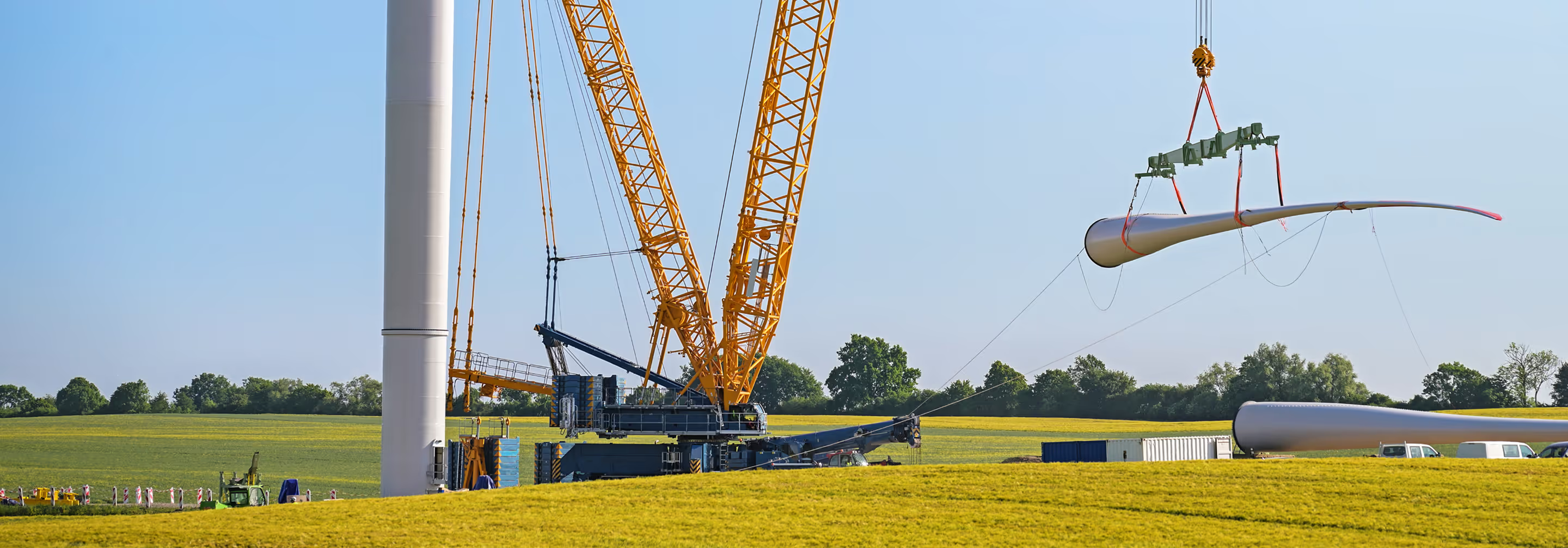
Global project logistics for oversized and time-critical moves.
Engineering support for complex project execution.
FF&E logistics for retail rollouts, remodels, and store openings.
White-glove delivery for high-touch, installation-ready shipments.
Value-added services, reverse logistics, and more.
Experience and Certifications to Serve You Best
We’re equipped to support complex global supply chains.



International Air Cargo Agents

Certified Operations

# C2024-01365

Customs Brokerage & Trade Expertise

President’s E Star Award



Trusted Chemical Partner
myMALLORY Digital Portal
Manage everything in one place, with real-time visibility, control, and insight across all shipments and supply chain activity.

Shipment Visibility
Real-time tracking for air, ocean, and domestic moves.

Milestone Updates & Alerts
Proactive status notifications.

Document Access
Invoices, B/Ls, PODs, and customs documents.

Reporting & Analytics
Shipment history, lane activity, and performance insights.

Customer Self-Service
Fewer emails, faster answers, better transparency.
.webp)
Let’s talk about your logistics.
Reach out to explore logistics solutions built around your business.

.svg)