
March 3, 2026
Iran War News and Supply Chain Update: What Shippers Should Know and Do Next
U.S. and Israeli strikes on Iran lit up headlines on February 28, and the fallout hit supply chains within hours. Retaliatory actions across the Gulf have triggered airspace restrictions, maritime security incidents, and a whole lot of freight-related disruptions.
The situation remains fluid, and we want to be straight with you: nobody can predict the future here.
What we do have, though, is experience.
Our team at Mallory Alexander has guided shippers through Red Sea disruptions, pandemic-era capacity shocks, port congestion, and rapid regulatory shifts (including with the latest tariff rulings). The conditions change every time, but the discipline stays the same: stay informed, stay flexible, and keep cargo moving safely.
We also recognize that real people, in real situations, all across the world, sit on every side of the latest Iran war news, and we don’t take that lightly.
So let’s get practical. Here are five key insights that could affect your lead times, costs, and service options in the coming weeks.
Key Insight 1: The Strait of Hormuz Just Became a Real Bottleneck
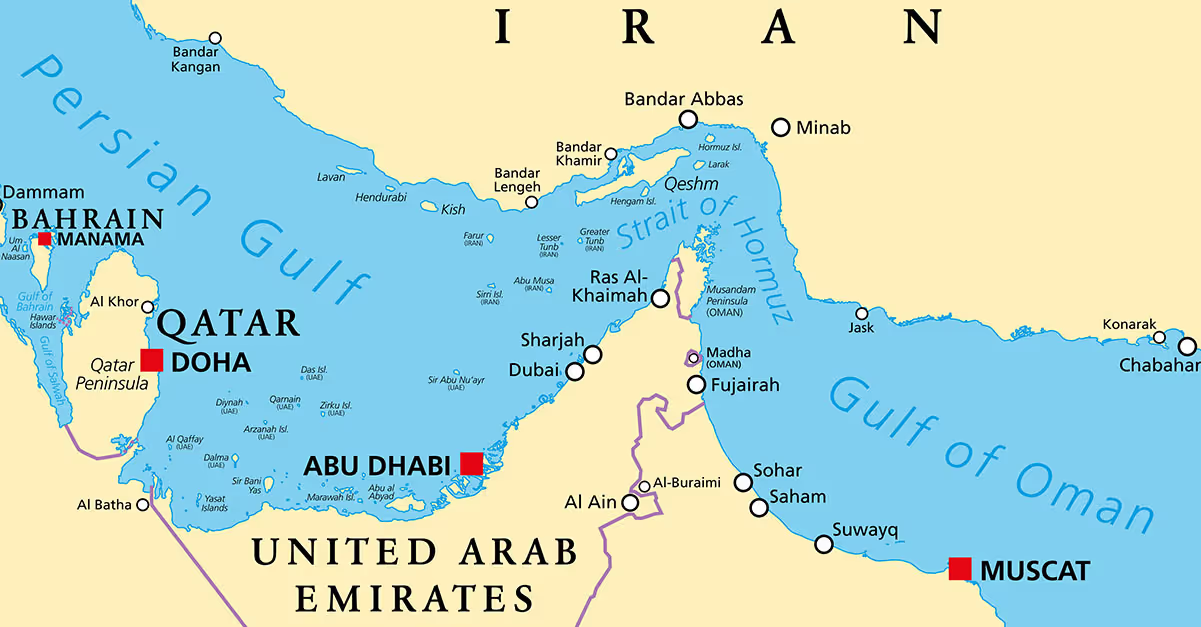
Roughly 20 million barrels of oil move through the Strait of Hormuz per day, accounting for about one-fifth of global petroleum consumption and LNG trade.
But now, that flow has nearly stopped.
The threat level has jumped from “tense” to “active.” UKMTO has flagged electronic interference risks, including possible AIS and communications disruption. Unverified closure claims are circulating on VHF channels. And an IRGC commander publicly declared the Strait closed, threatening to set fire to any vessel that crosses.
Your cargo doesn’t need to transit Iranian waters to feel the heat. When vessels hesitate at one of the world’s busiest chokepoints, the aftershocks quickly stack up: bunched vessels, crowded anchorages, missed connections, and carrier schedules that fall apart within days.
What to Do Now (Shipper Actions)
- Build a “two-plan” posture: Plan A routes and Plan B alternates.
- Confirm cutoffs and free time assumptions daily. Do not rely on last week’s transit expectations.
Key Insight 2: Carrier Routes, Rates, and Restrictions Feel the Impact
The Strait situation has already triggered real operational changes from major ocean carriers. Maersk and others have announced booking suspensions and restrictions across Upper Gulf markets, with reefer and specialty cargo taking the earliest hits.
Surcharges followed almost immediately. CMA CGM has published emergency conflict surcharges up to $2,000 per 20-foot container, $3,000 per 40-foot, and $4,000 for reefers and special equipment on Middle East trade lanes. Expect other carriers to follow.
Meanwhile, marine insurers have started canceling war risk coverage in parts of the region. Rising war risk premiums directly affect which vessels will sail where and how much available capacity you can count on. The cost increases you see on rate sheets today may only be the beginning.
What to Do Now (Shipper Actions)
- Flag shipments that are reefer, hazmat, high-value, or time-critical so you can preclear alternates early.
- Ask for written routing options and cost deltas, then decide based on business priority (service versus cost).
Key Insight 3: Air Freight Is Getting Rerouted, Slower, and Tighter Through Gulf Hub Disruptions
Air cargo is taking direct hits, too.
Iranian strikes damaged airports in Dubai, Bahrain, and Kuwait, and all three suspended operations for stretches. EASA has extended conflict-zone guidance across multiple Middle East airspaces, and carriers are rerouting around the region entirely.
The capacity loss is already showing up in the data. Asia-Middle East-Europe air cargo capacity dropped 26% over the weekend compared to the week before, according to The Loadstar.
That means longer routings, added fuel stops, higher spot rates, and fewer straightforward options through traditional Gulf hubs. Plan for delays and price your alternatives now.
What to Do Now (Shipper Actions)
- Move from “delivery date” to “delivery window” planning for the next one to two weeks.
- Preapprove alternates: direct lift where possible, or safer transit points that avoid constrained airspace.
Key Insight 4: Iran War News Affects Your Costs Even If Your Cargo Never Touches the Gulf
You might look at your trade lanes and think you’re in the clear. But because of the sheer importance of the Strait of Hormuz and the fact that there are limited alternatives, energy volatility doesn’t stay regional for long.
When crude prices spike, diesel-linked surcharges follow. So do costs for chemicals, resins, packaging, and other petroleum-based production inputs. Your suppliers feel it too, and their reliability can slip without warning.
There’s also a compliance angle worth watching. The U.S. Department of the Treasury continues to expand sanctions targeting Iran-linked maritime networks and vessels tied to evasion schemes. That means tighter screening across trade lanes and counterparties, even for shipments nowhere near the conflict zone.
What to Do Now (Shipper Actions)
- Tighten PO and production buffers for critical SKUs (especially medical, consumer staples, and time-sensitive retail).
- Confirm your restricted party screening and documentation are clean before cargo hits a pinch point.
Where Does Mallory Alexander Fit in the Grand Scheme of Things?
The situation is fluid and changing by the day. But you can run a disciplined plan with real alternatives and fast communication to stay on top of things.
That’s where we come in.
- 24/7 Monitoring and Proactive Exception Management: We track carrier advisories, port conditions, and risk alerts around the clock and translate them into clear next steps for your specific shipments. Fewer surprises, faster decisions.
- Alternate Routing and Mode Engineering: When a lane tightens, we pressure-test alternatives across ocean, air, and multimodal options, including reconsignment and rerouting to protect your service commitments. Electronics, medical, and priority replenishment freight get special attention here.
- Customs and Compliance Coordination Under Volatility: Clean documentation becomes a competitive advantage when sanctions enforcement heats up. Our licensed customs brokerage works hand-in-hand with transportation planning to reduce holds, dwell time, and rework.
- Warehousing and Inventory Buffering When Transit Times Stretch: Uncertain ETAs call for strategic storage and controlled staging. We have significant U.S. warehousing capacity to support contingency positioning and keep your downstream distribution on track.
- One View of the Truth for Your Team: Visibility only matters if it drives action. Our myMallory platform delivers milestone updates, alerts, and document access so your purchasing, production, and customer communication teams all work from the same real-time shipment data.
Bottom Line: Stay Informed, Stay Flexible, and Talk to Us
The Iran war news cycle will keep moving. So will the operational fallout. Maritime and air networks are already showing real constraints, and pricing signals are changing by the day. Safety comes first, and right behind it comes continuity: protect your lead times where you can, communicate early when you can’t, and keep your options open.
Mallory Alexander was built for moments like this, and we have over a century-long track record to prove it. Integrated forwarding, customs brokerage, warehousing, and transportation all sit under one owner.
If you have freight on the water, in the air, or staged to move, now is the time to validate your Plan A and line up Plans B, C, and even D.
Contact Mallory Alexander to review your current shipments, confirm alternate routings, and set a proactive update cadence for your team.
Back
When you sign up for our mailing list, you will receive industry news and the latest supply chain updates.

Please fill out the form and a Mallory Alexander customer service representative will contact you.
Your submission has been received, and our team will reach out soon.

.svg)