
January 22, 2026
Global Trade and Compliance January Update: Freight, Tariffs, and Geopolitics Collide
Your supply chain team probably hasn’t caught its breath yet, and 2026 is already doing its thing, throwing a multitude of global trade and compliance curveballs.
Ocean freight rates jumped 5-7% when retailers rushed to restock post-holiday inventory. President Trump imposed a 25% tariff on advanced computer chips. The EU and Mercosur finalized a free-trade deal years in the making. Then Washington threatened Europe with tariffs over Greenland, captured Venezuela’s President Maduro, and seized oil tankers tied to sanctioned crude.
That’s a lot to track when you’re also trying to move lumber, electronics, medical supplies, or consumer goods across borders on schedule, compliantly, and on budget.
The Signals From Ocean Freight Market Trends
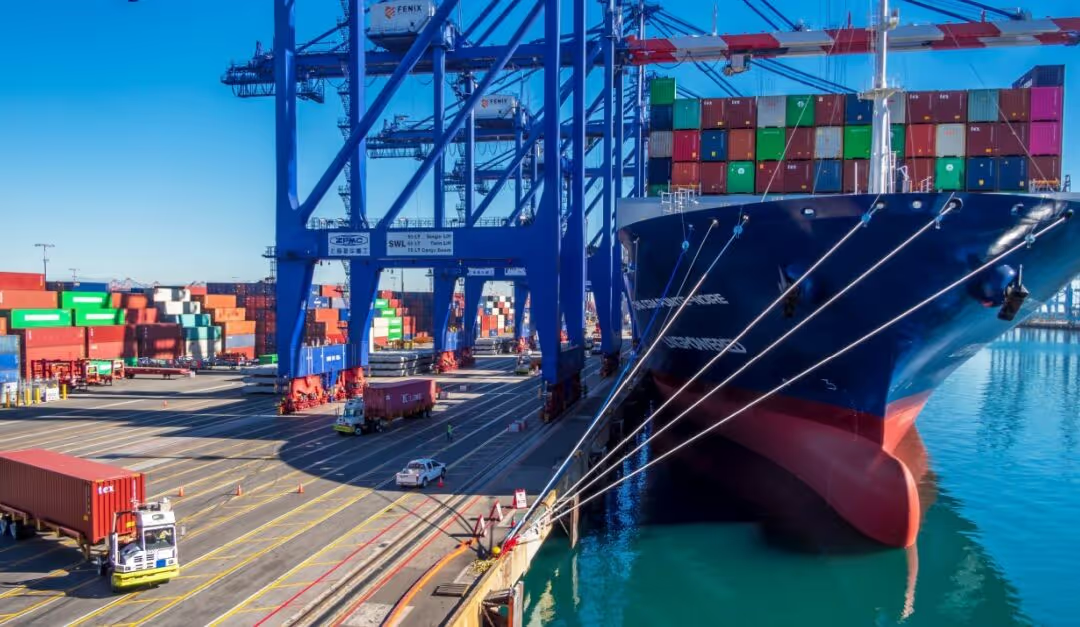
Nobody expected ocean freight to get interesting this early in the year. But U.S. retailers started restocking faster than usual, and the National Retail Federation now expects January imports to climb 6% month over month. That surge in demand pushed Asia-to-West Coast rates up 5% and East Coast rates up 7%, while carriers announced mid-month increases, winter weather snarled European ports, and the Lunar New Year sits around the corner.
Why Mallory Customers Should Care
Tight capacity costs money and time, and right now you’re looking at both. Those few percentage points in rate increases add up to thousands per container, and the contract rates you locked in last fall may already trail the spot market. Meanwhile, congestion building at Savannah and Los Angeles means transit times stretch longer, which throws off downstream schedules. Furniture, electronics, and consumer goods shippers tend to feel it first. Yet, when vessel space gets competitive, the pressure can quickly spread across industries.
Your 2026 Playbook
* Plan Shipments Early: Review inventory levels now and book ocean freight ahead of time. Lock in space now to hedge against mid-season hikes.
* Diversify Routings: If key ports are congested or weather-impacted, consider alternate gateways (e.g., East vs. West Coast) or intermodal (rail from East Coast to Midwest).
* Stage Inventory Stateside: Getting goods into a domestic warehouse early puts you in control. Port delays become someone else’s problem.
* Watch the Indices: Freightos and Drewry publish weekly. Spotting trends early helps you time bookings and catch surcharges before they surprise you.
* Know Your Air Freight Numbers: Ocean delays will happen. Running the math on air vs. ocean now means you can pivot fast later without guessing.
Washington’s New Chip Tariff Hits Advanced Semiconductors
The freight market wasn’t the only thing heating up. On January 15, President Trump slapped a 25% tariff on advanced computer chips after a national security review flagged semiconductor imports. The target is high-performance processors like Nvidia’s H200 and AMD’s MI325X that power AI servers and heavy computing, but exemptions do exist for chips going to data centers, consumer electronics, R&D, and domestic manufacturing. However, you’ll need documentation to prove it, and if trade talks stall, phase two could widen the net.
Why Mallory Customers Should Care
Electronics manufacturers, medical device makers, and tech suppliers all depend on imported semiconductors. Under the new rule, any server, laptop, or specialized equipment with a covered chip faces a 25% duty on top of existing tariffs. That cost stacks, and no FTA or trade program offsets it. Even if your products qualify for an exemption, you need documentation proving end use or destination. Get it wrong, and you’re looking at penalties. Get it right, and you still have extra compliance work. Either way, landed costs on critical components are climbing.
Your 2026 Playbook
* Audit Your HTS Codes: Review shipments to identify which chips meet the tariff’s technical thresholds. Many consumer-grade and data-center chips qualify for exemptions, but assumptions won’t hold up at Customs.
* Document Everything: Exemptions require proof of end use. Build that paper trail now.
* Revisit Sourcing Options: Some Taiwanese and South Korean suppliers fall under different tariff treatment. Product redesigns using non-targeted chips may also pencil out.
* Update Your Cost Models: Sales and finance teams need accurate landed cost forecasts before customers see surprise price increases.
The EU-Mercosur Free Trade Agreement
After 25 years of stop-and-start negotiations, the EU and Mercosur (Argentina, Brazil, Paraguay, Uruguay) signed a sweeping free trade agreement on January 17. The deal slashes tariffs on European machinery, chemicals, and auto parts heading south while opening EU markets to South American beef, soy, and wood pulp. Ratification still needs to work through individual legislatures, but momentum is building. When it takes effect, the agreement will create a trade zone covering 700 million people.
Why Mallory Customers Should Care
Global sourcing is about to change. South American wood pulp and cotton become more competitive in Europe, which could impact pricing and availability elsewhere. European machinery flowing into Mercosur markets may free up capacity that lands in North America, and if Brazilian beef and Argentine corn pivot toward Europe, commodity markets everywhere will feel it. U.S. shippers in lumber, paper, cotton, and consumer goods should watch closely. Even if you don’t trade directly with the EU or Mercosur, the new routes and relationships will pull on supply chains you do depend on.
Your 2026 Playbook
* Map Your Exposure: Identify where your suppliers or competitors overlap with Mercosur and EU trade flows. Pricing and availability could shift.
* Revisit Sourcing Options: Lower tariffs may make South American raw materials or European components more attractive. Run the numbers.
* Understand Rules of Origin: Qualifying for tariff breaks requires proper documentation. Get familiar with what counts.
* Watch Ratification Timelines: The deal isn’t final until legislatures approve it. Track progress so you’re ready to move when tariffs drop.
Greenland Drama Complicates Trans-Atlantic Trade
Trade disputes rarely involve Arctic territory, but this one does. President Trump’s push for U.S. control and access in Greenland briefly spilled into trade policy, with threats of new tariffs on European imports. For now, the tariffs are paused as Washington and NATO take first steps on Arctic security and resources. Europe remains wary. A major U.S.–EU trade deal is on hold, with lawmakers drawing a clear line on sovereignty. European leaders have been clear: Greenland is not for sale, and its sovereignty must be respected. For now, a trade war is avoided—but trust across the Atlantic has taken another hit.
Why Mallory Customers Should Care
European imports touch a lot of U.S. supply chains. Auto parts, machinery, and consumer goods from the EU could all face surcharges starting in February. A 10% bump is manageable. A 25% jump by summer changes the game entirely. And even if your products dodge the tariff list, the volatility matters. Currency swings, freight rate fluctuations, and European exporters rerouting through Asia all create uncertainty. Automotive and electronics shippers should pay close attention, but anyone sourcing from Europe needs a plan.
Your 2026 Playbook
* Track the Tariff Lists: The final product and country lists will determine real exposure. Stay close to official announcements.
* Identify Alternate Sources: North American or Asian suppliers may offer relief if European goods get too expensive.
* Review Contract Terms: Look for price adjustment clauses with EU suppliers and renegotiate before tariffs hit.
* Consider Timing: Delaying nonurgent shipments until the situation clarifies might save money or headaches.
* Check Other Agreements: Some products may qualify for exemptions under existing trade deals. Know your options.
We Have to Talk About Venezuela
The other headlines are easier to plan around. Venezuela is different. U.S. forces captured President Nicolás Maduro to start the year, then seized multiple oil tankers linked to his regime in international waters. On January 9, the Trump administration declared a national emergency over Venezuela’s oil revenues and moved to control proceeds from the country’s natural resource sales indefinitely. Venezuelan crude, once a steady presence in global markets, is now effectively embargoed. And the enforcement is aggressive.
Why Mallory Customers Should Care
You don’t have to ship Venezuelan oil to get caught up in this: banks and insurers are distancing themselves from anything that smells like sanctioned crude. Vessels suspected of carrying “dark fleet” cargo can be seized, and the U.S. isn’t asking questions first. If you’re routing goods through Caribbean hubs or Colombian ports, take a hard look at your logistics chain. One accidental brush with sanctioned cargo and you’re dealing with fines, frozen assets, or both. Meanwhile, pulling Venezuelan supply off global markets could push crude prices around, which means fuel surcharges for everyone. The direct exposure matters, but so does the secondhand stuff.
Your 2026 Playbook
* Screen Everything: Review partners and vendors for Venezuela ties. PDVSA and Maduro-aligned entities are off-limits.
* Reroute Around the Risk: Avoid Venezuelan ports and flagged vessels. Know exactly where your cargo is booked.
* Check Your Insurance: Confirm maritime coverage excludes losses tied to sanctioned goods.
* Review Financing Exposure: Letters of credit or accounts connected to Venezuelan transactions could freeze. Get legal eyes on them now.
* Source Fuel Elsewhere: U.S. Gulf, Mexico, and Middle East suppliers offer stable alternatives.
What Comes Next Is Up to You
Two weeks, five curveballs, and every one of them touches something in your supply chain. The connective tissue here isn’t complicated: Global trade and compliance got harder again, and the companies paying attention have a head start on the ones still catching up.
That’s where we come in. Mallory Alexander connects the dots between ocean and air forwarding, customs brokerage, trade compliance, warehousing, and domestic transportation. When tariffs hit mid-quarter or routes need to change overnight, that integration matters. Our M-PACT trade compliance team handles classification audits, duty minimization, restricted party screening, and FTA strategy. Our logistics teams build backup plans before you need them. And our myMALLORY™ platform keeps you seeing what’s happening in real time.
If any of the updates above touched a nerve, let’s talk. Reach out to our team, and we’ll help you figure out what to do about it.
Back
When you sign up for our mailing list, you will receive industry news and the latest supply chain updates.

Please fill out the form and a Mallory Alexander customer service representative will contact you.
Your submission has been received, and our team will reach out soon.

.svg)