

May 8, 2026
Iran War News: Supply Chain Risks and Freight Impacts Week of May 8
Executive Summary
The Iran war remains a logistics risk story, not just a geopolitical headline. Fresh U.S.-Iran fire around Hormuz, UAE air-defense activity, tanker seizures, higher fuel costs, and new sanctions warnings are keeping freight planning volatile. For shippers, the weekly takeaway is practical: protect transit options, verify counterparties, watch fuel-linked accessorials, and build sourcing flexibility before disruption becomes a purchase-order problem for priority cargo this week and beyond.
Intro
Ceasefire? Tell that to the Ocean Koi.
The Barbados-flagged tanker got seized in the Gulf of Oman the morning of May 8, sanctioned cargo and all, and capping a volatile week that included U.S. Navy ships fighting off Iranian attacks in the Strait, American jets hitting back at Iranian military sites, and UAE air defenses lighting up over Abu Dhabi.
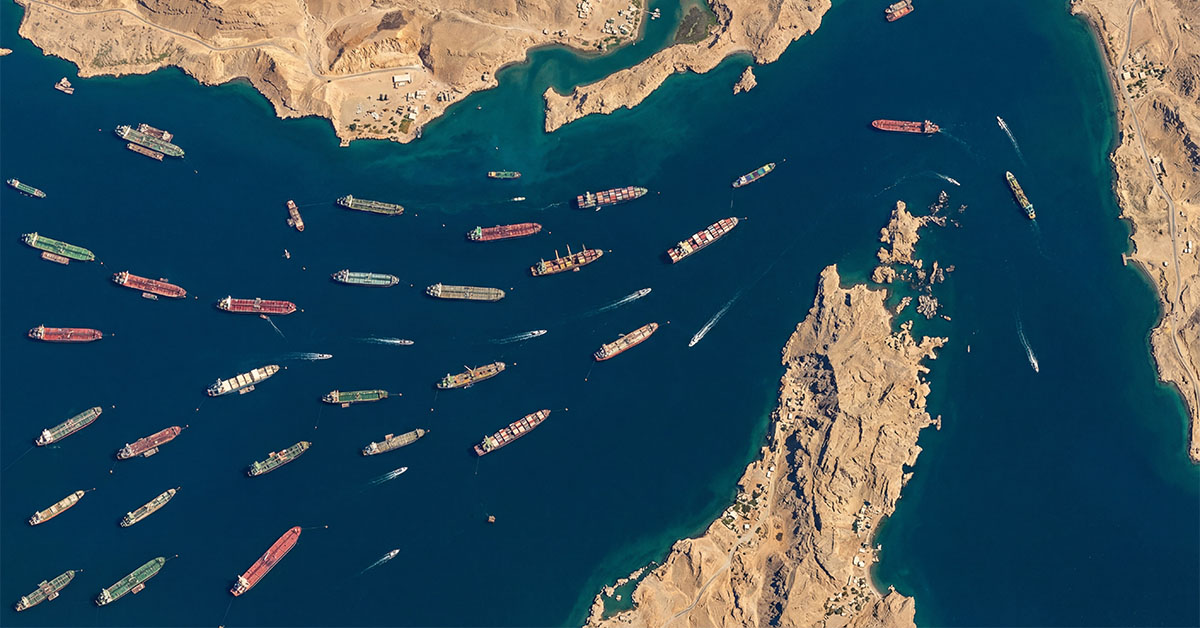
Yet while the shooting made the Iran war news front page, the quieter move is the one bending your freight budget: Tehran has turned Hormuz into a tollbooth, vetting vessels, taxing transits, and stacking hundreds of ships in queue while Washington warns that paying the fee could put you on a sanctions list.
Basically, pick your poison.
Crude oil is an easy story. But your reality runs deeper, from air capacity to domestic transport to sanctions and inputs.
Every lane connects to Hormuz right now, whether your bill of lading says so or not.
Air Freight: Capacity Tight, Routing Tighter
Air remains the pressure-release valve when ocean transit times blow up, but the valve is leaking. Middle East airspace keeps closing and reopening, jet fuel won’t sit still, and the gateways your medical, electronics, and high-value freight rely on are all fragile.
- UAE Airspace Closes Again: Iranian missile and drone activity pushed UAE authorities to restrict airspace again. Several flights diverted to Muscat or circled over Saudi airspace until clearance came through. Plan for repeat episodes, not isolated ones.
- Q1 Cancellations Were Worse Than Headlines Suggested: Reuters reported airport closures and flight cancellations across Middle East hubs through Q1, with carriers absorbing the rebookings quietly.
- Jet Fuel North of $100: Jet fuel cleared $100 per barrel, and aviation fuel shortage risk is back on the table for regional carriers. Surcharges follow fuel with a lag, so what you booked at last month’s rate won’t book at that rate next month.
- Air Benchmark Still 25% Above Prewar: Freightos pegged the global air benchmark at 25% higher than prewar levels, down 5% month over month. China-U.S. sits at $5.48/kg, Southeast Asia-Europe near $5.40/kg, South Asia-Europe around $4.60/kg, and Southeast Asia-North America at $6.41/kg.
- Book Air for Priority, Not Panic: Reserve uplift for true time-critical freight: medical, electronics, high-value SKUs that can’t wait out an ocean delay. Preclear service levels, alternate gateways, and lift windows before you book.
Ocean Freight: Iran War News Hits Surcharges Before It Hits Capacity
Now to the water, where once again volatility shows up on your invoice instead of your news feed. Ocean freight remains the center of attention and is absorbing the conflict the way it usually does.
- WCI Climbs After Three Weeks Down: Drewry’s World Container Index rose 3% to $2,286 per 40-foot container on May 7, snapping a three-week slide. Shanghai-New York jumped 7% to $3,721, and Shanghai-LA gained 5% to $3,062.
- Surcharges Doing the Heavy Lifting: Carriers are stacking Emergency Fuel Surcharges, Peak Season Surcharges, and firmer FAK levels to claw back fuel and risk exposure.
- Hormuz Toll Standoff Continues: Mitsui O.S.K. Lines claimed that three of its vessels transited Hormuz in April without paying Iranian fees and cited navigation rights under international law. The U.S. Treasury has warned that shippers who do pay could face sanctions exposure.
- One Strait, One-Fifth of Global Seaborne Energy: By now, you know that 20% of global seaborne crude and LNG flows transit Hormuz. Anything energy-adjacent in your basket carries that exposure, even if your container never goes near the Gulf.
- Compare All-In, Not Base Rate: Gulf-linked cargo, energy-dependent commodities, and Middle East transshipment routings deserve a closer look. Stack base rate against EFS, PSS, war-risk premiums, detention risk, reroute cost, and blank-sailing exposure before you sign.
Domestic: Consequences at the Pump and Your Linehaul
Ocean and air carry the conflict overseas. Diesel carries it to your doorstep. The Iran war shows up in your domestic budget through fuel, surcharges, and spot rates that won’t sit still. Even if every load you tender stays inside U.S. borders, the Gulf is on your invoice.
- Diesel Up Nearly $2 Since March: EIA’s May 5 release put on-highway diesel at $5.640 per gallon for May 4, up from $5.351 the week before and $3.897 on March 2. All-grades gasoline hit $4.581 on the same date.
- Truckload Rates Hit Two-Year Highs: DAT reported March truckload spot and contract rates at their highest in more than two years, with fuel recovery doing most of the work. Spot van came in at $2.52/mile, reefer at $2.97/mile, and flatbed at $3.09/mile.
- Fuel Surcharges Almost Doubled: DAT’s van fuel surcharge climbed from 41 cents to 61 cents per mile in a matter of weeks. The linehaul on your contract may look stable. The FSC line is where the pain is.
- Spot Market Reading Hot: Carriers know diesel can move again and are pricing accordingly on the spot side. Expect quotes to firm on lanes you used to cover cheaply, especially out of Gulf and Southwest origins.
- Audit the FSC Formula, Not the Linehaul: Pull your fuel surcharge schedule and confirm the trigger price, the indexing source, and the cents-per-mile step.
Trade Compliance and Sanctions: Logistics Pulled into the Enforcement Zone
Trade compliance used to live with finance and procurement. But Iran-related enforcement has dragged it into the operational seat next to your forwarder. Document trails all matter more this week than they did last month.
- Treasury Spotlights Chinese “Teapot” Refineries: Treasury’s April 28 advisory flagged China-based teapot refineries as central to Iranian crude flows and pegged China at roughly 90% of Iran’s oil exports. Anything touching those refinery counterparties deserves a second pass.
- Front Companies and STS Transfers in the Crosshairs: Treasury called out front companies, ship-to-ship transfers, falsified documentation, and vessel identity manipulation as the patterns drawing enforcement attention.
- 1,000-Plus Designations and Counting: OFAC’s April 15 release said it has sanctioned over 1,000 persons, vessels, and aircraft since the renewed maximum pressure campaign began.
- Strict Liability Means No “I Didn’t Know”: Treasury’s May 7 notice reiterated that OFAC can impose civil penalties on a strict-liability basis. U.S. and foreign persons both sit in scope. Intent is not the defense you think it is.
- Screen Everything That Touches the Move: Run vessels, owners, managers, suppliers, intermediaries, banks, ports, and odd routing patterns through your screen before booking.
Input Markets and Sourcing: Iran War News Hits the Bill of Materials Before the BOL
The Iran war’s second-order hit lands inside your BOM long before it shows up on a freight invoice. Chemicals, plastics, fertilizer, food inputs, packaging, fuel, and electronics components are all exposed, and your supplier’s supplier may already be repricing.
- Food Prices Hit a Two-Year High: The FAO Food Price Index climbed to 130.7 points in April, up 1.6% from March and the highest reading since February 2023. Vegetable oils jumped 5.9% month over month, and cereals added 0.8%.
- Fertilizer Cost Is Reshaping Planting Decisions: Higher fertilizer costs are pushing growers away from input-intensive crops, which means the food and ag categories you source today may not look the same next quarter.
- Petrochemicals Through the Roof: Reuters claimed that polyethylene is up nearly 37% and polypropylene up more than 38% since the start of the conflict. Middle East supply accounts for over 40% of global polyethylene exports, and roughly $20 billion to $25 billion in petrochemicals move through Hormuz a year.
- Resin-Linked Packaging Is Exposed: If your product ships in plastic, your packaging line is sitting on top of those resin moves. Lock pricing where you can and confirm secondary suppliers before the next PO cycle.
- PPE Resin Tightens Circuit Board Supply: The war disrupted high-purity PPE resin used in printed circuit boards, with SABIC supplying roughly 70% of global volume and struggling to restart after a strike on Saudi Arabia’s Jubail complex. Electronics buyers should pressure-test subcomponent visibility now.
The Headlines Will Keep Coming. Your Freight Still Has To Move.
Take a breath. The Iran situation is loud, and it’s going to stay loud for a while. But loud doesn’t always mean broken. Cargo is still moving, lanes are still booking, and containers are still landing where they’re supposed to land. The work right now is keeping a steady hand on the pieces you control: where your freight goes, how it’s documented, who’s watching it, and who picks up when you call.
You’ve handled hard weeks before. This is no different. Every time, the shippers who came out the other side weren’t the ones with a perfect read on the news. They were the ones with people they trusted in the seats that mattered. That part hasn’t changed, and it’s the part you can still solve for today.
Iran war news creates real pressure across air, ocean, domestic transportation, and sourcing, but shippers don’t have to handle it alone. Mallory Alexander helps businesses stay ahead of disruption with integrated freight forwarding, warehousing, transportation coordination, and practical trade-compliance support.
If your team needs help with pressure-testing routes, managing cost exposure, or building a more resilient shipping plan, we’re here for you.
Back
When you sign up for our mailing list, you will receive industry news and the latest supply chain updates.

Please fill out the form and a Mallory Alexander customer service representative will contact you.
Your submission has been received, and our team will reach out soon.

.svg)