
April 8, 2026
Iran War News: Week of April 10 Supply Chain Risks and Freight Impacts
Executive Summary
After six weeks of war, April 8 brought a two-week ceasefire, not a clean reset. Shipping lines are still cautious, Upper Gulf bookings remain constrained, jet fuel and diesel markets are still tight, and sanctions risk has not disappeared. For U.S. shippers, the practical question is no longer whether disruption exists, but how long elevated surcharges, slower routings, and input-cost volatility will linger.
Intro
A ceasefire landed on April 8, and if you checked the Iran war news headlines, you’d think the war and subsequent supply chain stories were over.
You’re sorely mistaken.
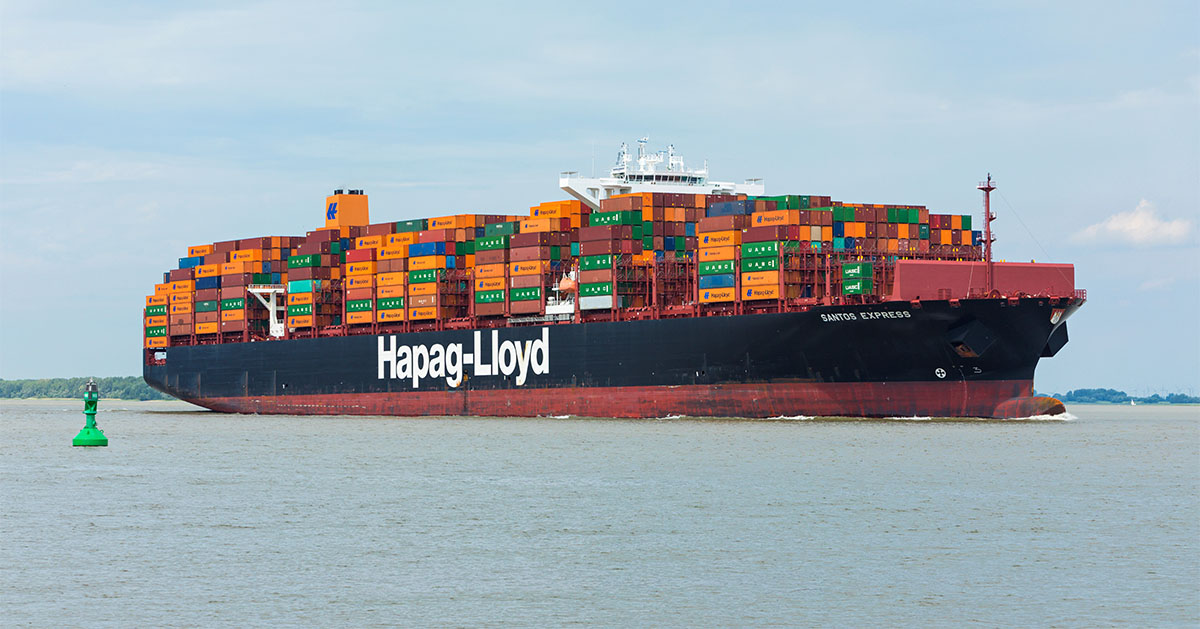
Maersk is still holding vessels outside normal Hormuz transit patterns. Hapag-Lloyd is telling customers six to eight weeks before anything resembling standard routing returns. All as every stranded hull waiting to clear that bottleneck represents cargo that’s late, repriced, or both.
A two-week diplomatic pause doesn’t magically fix that.
Ceasefire or not, the Iran conflict has metastasized far beyond one choke point. We’re back for another week, breaking down where each pressure point sits and what to watch for, whether or not this ceasefire holds.
Air Freight: The Expensive Band-Aid Everyone’s Reaching For
Air freight remains the default pressure-relief valve for shippers who can’t wait on ocean timelines, and the Iran war news cycle keeps feeding demand for it. The problem is that “default” and “affordable” parted ways weeks ago.
- Critical Cargo Only, Unless You Enjoy Burning Cash: Some shippers have started moving freight from ocean to air, and Reuters pegged the cost difference at 5 to 10 times the ocean rate. Maybe that works for bridge inventory, production-line-saving components, and service-critical SKUs, but it doesn’t for broad replenishment.
- Jet Fuel Supply Is the Real Bottleneck: Capacity constraints get the attention, but fuel is doing the heavier damage. Jet fuel prices more than doubled earlier in the conflict. Airlines across Asia are carrying extra fuel onboard, adding refueling stops, and trimming schedules in some markets.
- A Truce Cools Headlines Faster Than It Cools Air Freight Costs: IATA’s chief warned that jet fuel supply could take months to normalize even after the Hormuz Strait fully reopens. Surcharges and premium air quotes will stay sticky well past any diplomatic milestone. Plan budgets accordingly and don’t let optimistic headlines rewrite your forecast.
- Closed Airspace Is Still Reshaping Routes: Gulf and Iranian airspace restrictions forced carriers onto longer corridors, and those detours burn more fuel per flight. Even flights that never touch the Middle East are feeling it through tighter global fuel allocation. Extra flight time means extra cost, and carriers are passing costs through.
- Review Your Air Exposure Weekly, Not Monthly: Pull up airport fuel notices, check uplift restrictions at your origin and transit hubs, and reread the fuel-surcharge language in your carrier agreements. Decide which SKUs genuinely justify air at current pricing and move everything else to a slower, cheaper mode.
Ocean Freight: Open Doesn’t Mean Normal
Ceasefire talk sounds optimistic, but ocean freight tells a different story. Maersk acknowledged the reopening could create opportunities but stopped short of promising routine service. Hapag-Lloyd said normalization could take six to eight weeks, with roughly 1,000 vessels still stuck in the region. Even a clean reopening leaves a backlog that could take over two weeks to clear.
- A Controlled Reopening Is Not A Green Light: Even if Hormuz traffic resumes, the backlog alone could take more than two weeks to unwind under ideal conditions. Port congestion, vessel repositioning, and equipment imbalances will outlast the Iran war news headlines by weeks. Plan around the recovery timeline, not the ceasefire date.
- Surcharges Are Rising Even While Base Rates Soften: Xeneta data shows Far East and Southeast Asia export corridor fuel surcharges up nearly $150 year to date and $176 since March 1. Major carriers have layered emergency fuel and bunker surcharges across trades. Your all-in cost is climbing even if the base rate on your contract looks flat.
- Pain Has Spread Beyond the Persian Gulf to North Europe: Longer haul lanes far from the Gulf are absorbing surcharge increases too, because fuel burn and rerouting costs impact the entire network. Every ship that takes the long way around Africa adds cost to lanes that never touched the Middle East.
- Separate Your Rate Components Now: Keep base ocean rates and emergency surcharges on different lines. Push for 30- to 60-day validity windows. And ask your carrier or forwarder to spell out contingency plans for Upper Gulf cargo, alternate gateways, and inland extensions before you need them.
- The Backlog Will Create Its Own Disruption: A thousand parked ships don’t just resume service overnight. Expect port bunching, equipment shortages at origin, and container availability gaps that last well into the summer. Build a buffer into your ETAs now.
Domestic Transport: Hormuz Hits Your Truck Too
The U.S. only sources about 8% of its crude imports from the Middle East. However, diesel prices are set by global markets, not local ones. EIA data shows U.S. diesel averaging $5.65 a gallon as of April 6 and projected to peak above $5.80 this month. Domestic transport is not immune.
- Diesel Is The Transmission Line: Your trucks, rail, and intermodal containers all run on fuel priced against the same global benchmarks that Hormuz just broke. Iran war news may focus on tankers and crude, but the cost shows up every time a driver in the U.S. swipes a fuel card.
- U.S. Fuel Exports Hit A Record, And That’s Your Problem: Clean-product exports reached 3.11 million barrels per day in March as Europe, Asia, and Africa chased replacements for Middle East supply. Strong domestic production sounds reassuring until the barrels leave the country. Record exports mean a tighter domestic supply.
- Fuel Surcharges Are Resetting In Real Time: Most carrier surcharge formulas reference DOE weekly diesel averages. With prices climbing through April, expect surcharge resets to hit hard on monthly and quarterly triggers. Pull your contracts and check the math before the next invoice does it for you.
- Shorter Quote Windows Are The New Normal: Carriers don’t want to hold pricing for 90 days when diesel moves 30 cents in a week. Push for transparency on surcharge calculations and build fuel volatility into every Q2 customer conversation.
- Review Pass-Through Language Now: If your contracts don’t clearly define how surcharges flow to your customers, April is an expensive month to find out. Clean up that language before the next rate cycle catches you flat.
Trade Compliance: Talks Are Not Relief
Ceasefire discussions have included sanctions and tariff relief on both sides. But read the fine print: major disagreements remain, nothing has been formally issued, and the compliance burden is still fully active.
- Maximum Pressure Remains: Treasury’s latest action targeted over 30 individuals, entities, and vessels tied to Iranian petroleum and weapons networks. OFAC sanctioned more than 875 persons, vessels, and aircraft in 2025 alone as part of its Iran campaign.
- Look Past the Name on the Invoice: Vessel history, beneficial ownership, transshipment patterns, unusual routing, and flag changes all matter. OFAC’s maritime sanctions-evasion guidance spells out exactly what red flags to watch for, and it applies to anyone touching Gulf or petroleum-adjacent cargo.
- Medical and Humanitarian Cargo Is Not Automatically Clear: OFAC maintains guidance for food, agricultural commodities, medicine, and medical devices headed to Iran. Some devices still require specific authorization. Even “essential goods” should be framed as license-and-documentation-sensitive, not automatically risk-free.
- Shadow Fleet Activity Is Accelerating: Flag-hopping, AIS gaps, and ship-to-ship transfers have multiplied since the conflict started. Your denied-party screening needs to catch what a bill of lading won’t show you.
- Document Everything, Assume Nothing: If a deal truly materializes, regulators will still audit what you did today. Keep records clean, decisions documented, and screening current.
Input Markets: The Price Drop Has Fine Print
Brent crude dipped below $100 on ceasefire news, and procurement teams everywhere exhaled. Enjoy that for a moment. EIA still forecasts Brent averaging $115 in Q2 under a gradual-reopening scenario, and physical crude grades were trading near $150 before the ceasefire talk even started.
- Futures Cooled But Physical Markets Haven’t Caught Up: Jet fuel and diesel were at extreme levels in Europe before the ceasefire headlines hit. Procurement budgets, supplier lead times, and contract pricing all lag the futures screen. Don’t mistake a headline drop for a cost correction your vendors have already priced in.
- Fertilizer Is Still Running Hot: DAP prices are up 20%. The Gulf handles nearly half the world’s urea output and a third of global ammonia. Spring planting is already underway with elevated input costs baked into every acre.
- Europe’s Energy Exposure Runs Deep: Hormuz normally carries 8.5% of EU LNG imports, 7% of its oil, and 40% of its jet fuel and diesel. Those numbers explain why chemical surcharges, packaging costs, and production economics across the continent remain under pressure even with a potential reopening.
- Supplier Quote Windows Tell You More Than Iran War News: If your resin or chemical vendor shortened quote validity from 30 days to 7, that signal matters more than any futures chart. Watch vendor behavior for early reads on where costs are headed next.
- Build Your Sourcing Buffer Now: Revisit dual-sourcing options, activate regional backup suppliers, move exposed contracts to indexed pricing, and add strategic safety stock on energy-sensitive inputs. The reopening will take weeks to normalize supply. Your production schedule probably can’t wait that long.
What This Means For Your Supply Chain
Ceasefire or not, the costs from this conflict are already in the system and they won’t flush out on a diplomat’s timeline. None of that is unmanageable, but it does require current intelligence, flexible routing, disciplined screening, and the ability to shift modes fast when conditions change. Shippers who have those pieces coordinated under one roof will weather this far better than those reacting headline by headline.
The Iran war is creating real pressure across air, ocean, domestic transportation, and sourcing, but shippers don’t have to handle it alone. Mallory Alexander helps businesses stay ahead of disruption with integrated freight forwarding, warehousing, transportation coordination, and practical trade-compliance support.
If your team needs help with pressure-testing routes, managing cost exposure, or building a more resilient shipping plan, we’re here for you.
Back
When you sign up for our mailing list, you will receive industry news and the latest supply chain updates.

Please fill out the form and a Mallory Alexander customer service representative will contact you.
Your submission has been received, and our team will reach out soon.

.svg)