October 28, 2026
Climate-Controlled Warehousing: When You Need It and How to Find It
Executive Summary
Climate-controlled warehousing is worth the premium when temperature or humidity can damage your product or get it rejected, and when the provider can prove conditions where your freight sits. This guide shows which products need it, including electronics, industrial components, packaging, specialty chemicals, and consumer goods. It covers what to ask before you sign, from monitoring and backup power to cost and certifications, and why handoffs around the warehouse matter as much as the building.
Intro
Bad storage usually gets discovered somewhere else, like a customer’s DC that rejects a load of crushed cartons or a production line that has to bake a reel of components before it can use them. By then you’re paying for the damaged inventory, the freight to move it twice, the chargeback, and an uncomfortable call with a customer who’s starting to wonder about you.
A lot of it starts with a reassuring number. The sensor by the warehouse office says 74 degrees and the dashboard stays green, while your product sits near the roof, where August worked on it all afternoon.
After the hottest U.S. summer in 132 years, with July averaging 76.9°F across the Lower 48, shippers have good reason to look past the number on the wall. Heat collects up high, and humidity rises and falls with the weather. Electronics, industrial parts, packaging, chemicals, and consumer goods can all react before anyone in the office knows there’s a problem.
Winter has its own tricks too. Run the heat hard enough, and the air can get so dry that products start shrinking, cracking, or building static.
So when a facility says it offers climate-controlled warehousing, ask a few follow-ups before you choose them as your warehousing and distribution partner.
Do I Actually Need Climate-Controlled Warehousing or Just a Dry Building?
If your product can ride out summer heat, winter cold, and normal humidity swings without changing, a dry building is probably enough. If moisture or temperature can damage it, downgrade it, or force you to rework it, you need climate-controlled warehousing.
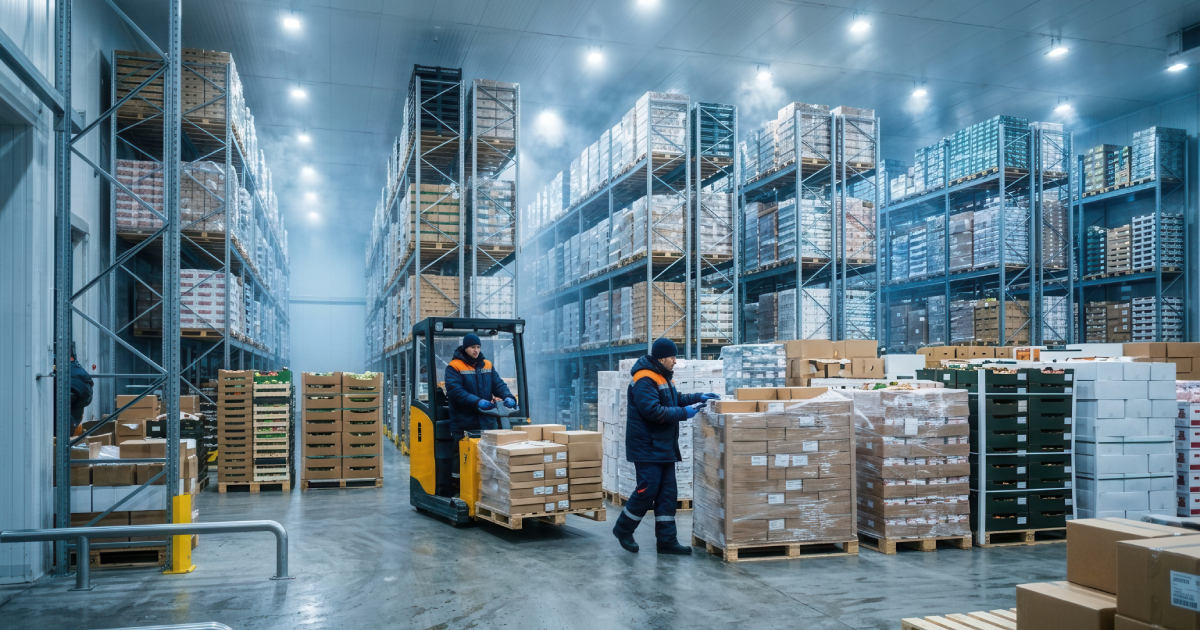
The difference shows up once you look at the freight instead of the thermostat. Climate-controlled space usually holds roughly 55-75°F and below 60% humidity. A dry warehouse keeps the weather off your product, but it doesn’t promise much beyond that.
Food, pharmaceuticals, and farm products tend to get the attention, but a lot of manufactured and distributed goods have limits too.
If your SKU has no meaningful limit, save the premium. If it does, match the warehouse to the product’s range instead of assuming colder or drier is automatically safer.
What Temperature and Humidity Range Will You Hold, and How Will You Prove It?
The warehouse should give you a specific range it will hold, in writing, and that range needs to match your product. In general climate-controlled space, expect roughly 55-75°F with relative humidity below 60%. Some products need a tighter or different range, such as a drug labeled for controlled room temperature (20-25°C) or a water-based adhesive that can’t be allowed to freeze.
Then make them prove they can hold it where your freight will actually sit.
Ask for sensor locations, calibration records, and 12 months of temperature and humidity readings from your storage zone. One thermostat by the office door tells you almost nothing about the top rack in August.
You also need to know what happens when a sensor trips an alarm at 2 a.m. A provider with real-time visibility should be able to show you the history and the response process without going on a two-week scavenger hunt.
What Happens When the Power Goes Out?
The backup generator should take over automatically and keep the HVAC, dehumidification, alarms, and monitoring online until utility power comes back. You want to know it can do that before an ice storm turns your inventory into the test case.
The grid is carrying more strain too. Commercial power averaged 14.53 cents per kWh in July, up 3.4% year over year, while EIA says commercial customers, led by data centers, drove 63% of this year’s electricity-sales growth.
So ask for three things:
- The generator’s kW rating next to the HVAC system’s actual draw
- How many hours of fuel they keep on site
- The last three load-test records
The load test is the record that matters most. A monthly engine start proves very little. You want proof the generator can carry the full climate-control load for hours, with someone clearly responsible for testing and maintenance as part of the site’s continuity plan.
How Much Does Climate-Controlled Warehousing Cost?
Climate-controlled warehousing generally carries higher operating costs than ambient storage, and rates vary by market, building, and volume. The right storage environment can also reduce product loss, quality issues, and costly disruptions, which makes total cost of ownership a more meaningful comparison than the storage rate alone.
Start with what damage would cost you. Add up a year of write-offs, rework, chargebacks, and replacement freight for the product you plan to store, then compare that with the difference in storage cost.
Then read the billing terms as closely as the rate. Handling is usually billed separately, and cubic-foot billing can run 30% higher than pallet pricing on the same inventory.
So when you compare 3PLs, compare the whole cost to serve, not the prettiest storage rate on the proposal.
What Certifications and Audit Records Can You Show Me?
A good warehouse should be able to show you its current registrations, relevant certifications, most recent audit date and score, plus the records behind them. Outside food, that usually means ISO 9001 certification, pest control records, and proof they can meet your retail customers’ labeling and routing requirements. If all you get is a framed certificate and a confident smile, keep digging.
If you store food, start with the basics: there’s no FDA “food-grade” certificate. Warehouses holding food for U.S. consumption need FDA food facility registration. Programs such as AIB, SQF, BRCGS, and ISO 22000 are voluntary, so the latest audit matters more than the logo. AIB scores out of 1,000, with 700 considered passing.
Then ask how they handle traceability. FSMA 204 may not hit until July 20, 2028, but the requirements are already clear. If your 3PL can’t assign lot codes, preserve the data and produce it quickly today; that’s worth knowing before your customer asks tomorrow.
Who Controls the Product Between the Container and the Rack?
In many supply chains, no one is responsible for that whole stretch. Working with an integrated logistics partner can reduce the complexity of managing multiple handoffs, improve shipment visibility, and establish clearer accountability from port arrival through warehouse putaway.
That matters because a lot of “warehouse damage” happens before the product ever reaches the rack. A container can sit on a chassis, wait at a dock, or move through a transload in conditions that undo everything you’re paying climate-controlled storage to protect.
Winter makes that especially risky. An 8-10°F drop in container-wall temperature can trigger condensation, creating the “container rain” that costs shippers an estimated $6 billion to $8 billion a year.
Ask who controls drayage, transloading, and put-away. When each piece sits with a different company, a problem can turn into several explanations and no clear fix. A coordinating partner gives you a single chain of custody and a clear owner for protecting the freight.
Why Climate Control Is Only One Part of the Supply Chain
A climate-controlled building protects your product while it sits on a rack. Before it gets there, it passes through a lot of hands: an ocean or air carrier, a customs broker, a drayage carrier, a transload facility, and a trucking company.
Each handoff is a chance for conditions to slip or for information to get lost. A container held for a customs exam can sit at the terminal for days, and a transload crew may never see the note that says the product can’t freeze.
Coordinating ocean and air freight, customs brokerage, domestic transportation, transloading, and warehousing through one partner means the product’s handling requirements get set once and travel with the shipment, instead of being re-entered (or forgotten) at every handoff. It also means one team is watching the freight from origin to rack, even when several carriers and facilities do the physical work.
How Can Mallory Alexander Help With Climate-Controlled Warehousing?
We help you figure out what your freight needs most, then make sure the protection doesn’t disappear somewhere between the port, the dock, and the rack.
After more than 100 years moving freight, we know the warehouse is only one piece of that job. Mallory Alexander has 31 locations and more than 1.4 million square feet of U.S. warehouse space under contract, with heated buildings where the freight moves.
What that means for your freight:
- Cooling When Needed: If your program needs air conditioning, we can work with you on adding it. We’ve done it before, with the customer funding the install.
- Specialized Space Through Qualified Partners: When a product needs tighter temperature control, food-grade, or hazmat storage, we find the right facility and manage it as part of your network.
- One Team From Terminal Gate to Put-Away. We coordinate the customs entry, drayage, transload, and storage, whether the work runs through our own facilities or trusted partners. You can follow the shipment, records, and documents in myMALLORY along the way.
- Help with Bigger Network Decisions: We connect global freight forwarding, customs brokerage, domestic transportation, and warehousing, so the same team can help you weigh a new distribution location, review your warehousing setup, or cut down the number of logistics providers you manage.
- A Straight Answer On the Building: Square footage and storage rates are easy to compare, but they won’t tell you whether a building can protect your freight. We’ll help you get that answer before you sign.
Contact Mallory Alexander to talk through your warehousing and distribution needs. Tell us what you store, where it comes from, and what conditions it can tolerate, and we’ll help you choose the right storage tier.
Or reach out to Benny Cissell, 502-773-9194, bennyc@mallorygroup.com.
Back
When you sign up for our mailing list, you will receive industry news and the latest supply chain updates.

Please fill out the form and a Mallory Alexander customer service representative will contact you.
Your submission has been received, and our team will reach out soon.